Checking accounts are supposed to be the boring, dependable part of your money life. And yet, they are where I see people get hit with the most irritating nickel-and-dime charges. Not because you did anything wrong, but because bank fee policies can be structured in ways that make fees easier to incur the moment your life gets a little messy.
Let’s make this simple: below are five sneaky checking account fees, how they show up, and exact scripts you can use to ask for a waiver. You do not need to be pushy. You just need to be clear.

Before you call: 3 quick checks
Fee reversals are part policy, part timing, part how prepared you are. Take two minutes and gather:
- The date and amount of the fee
- Your account history (have you had fees in the last 6 to 12 months?)
- Your account relationship (direct deposit, how long you have banked there, your typical balance)
Also, if your bank has chat support inside the app, you can often get the same result without a phone call. The scripts below work either way.
Quick reality check: waivers are never guaranteed, and some banks limit how often they will reverse fees. If you want to know what your bank allows, look up your account’s fee schedule (it may be listed as a “schedule of fees” or “personal deposit account fees”).
1) Monthly maintenance fees
This is the classic “you missed the requirement, so the fee kicks in” charge. It’s usually triggered when you do not meet a requirement like:
- Maintaining a minimum daily balance
- Having a qualifying direct deposit
- Sometimes making a certain number of debit card purchases (at some banks or on some account types)
- Being a student, under a certain age, or part of a relationship bundle (checking plus savings, etc.)
How to spot it
Look for phrases like monthly service fee, maintenance fee, or account fee on your statement. It often hits on the same day each month.
How to get it waived
If you almost met the requirement (missed the minimum balance by a day, direct deposit posted late), ask for a courtesy reversal and then ask how to avoid it going forward.
Phone script: “Hi, I’m calling about a monthly maintenance fee that posted on March 5 for $12. I’m working to keep my account in good standing. Can you waive this fee as a courtesy and tell me the easiest requirement to meet so it doesn’t happen again?”
Pro tip: If your bank offers a no-fee checking option, ask to be switched.
“If I can’t reliably meet the requirements, can you switch me to a no monthly fee checking account today?”
2) Overdraft fees
Overdraft fees are brutal because they can stack, depending on your bank’s rules, daily caps, and any grace amount they offer. One small charge can put you negative, and then other scheduled payments (or that small debit purchase you forgot about) can pile on more fees before you notice.
How it sneaks up
- Recurring charges hit overnight
- Gas stations and hotels place holds that settle later
- Pending vs. posted timing can make your available balance look different than you expect
Quick clarity: your current balance is what has posted. Your available balance subtracts pending transactions and holds. Fees tend to follow the available balance, not what you think is “really” there.
How to get it waived
Some banks and credit unions will reverse an overdraft fee as a one-time courtesy, especially if your account is usually in good standing and you bring the balance positive quickly. It depends on the institution, the account type, and your history.
Phone script: “Hi, I see an overdraft fee for $35 from April 18. This was a one-time situation and I’ve already brought the account positive. Can you reverse the overdraft fee as a courtesy? I’m also happy to update settings so this doesn’t happen again.”
Then immediately ask for one of these protections:
- Turn off overdraft coverage for debit card and ATM transactions (for most U.S. banks, this means purchases are declined instead of approved with a fee)
- Link a savings account for overdraft transfers (this may be cheaper than an overdraft fee, and it is sometimes free, but some banks charge a transfer fee so check your fee schedule)
- Set low-balance alerts in the app
Important: Turning off debit card and ATM overdraft coverage does not stop every overdraft. Checks and ACH payments (like rent portals and autopay bills) may still go through and overdraw your account depending on the bank’s rules.

3) NSF fees
NSF fees are the cousin of overdraft fees. The difference is: instead of the bank covering the transaction, the payment is returned or rejected, and you still get charged.
This can happen with ACH payments like rent portals, utility payments, gym memberships, and some autopay setups. It can also happen with checks or bill pay items that get returned.
Why it’s extra painful
You may get hit twice: your bank charges an NSF fee, and the company you tried to pay may charge a returned-payment fee too. That second fee depends on the merchant’s policy.
How to get it waived
Phone script: “Hi, I’m calling about an NSF fee of $32 on May 2. The payment was returned, and I’ve already corrected the issue. Can you waive that NSF fee as a one-time courtesy? I’m working to make sure my payments clear consistently.”
Quick prevention move: If the biller allows it, change the due date so it lands right after payday, and set a reminder the day before.
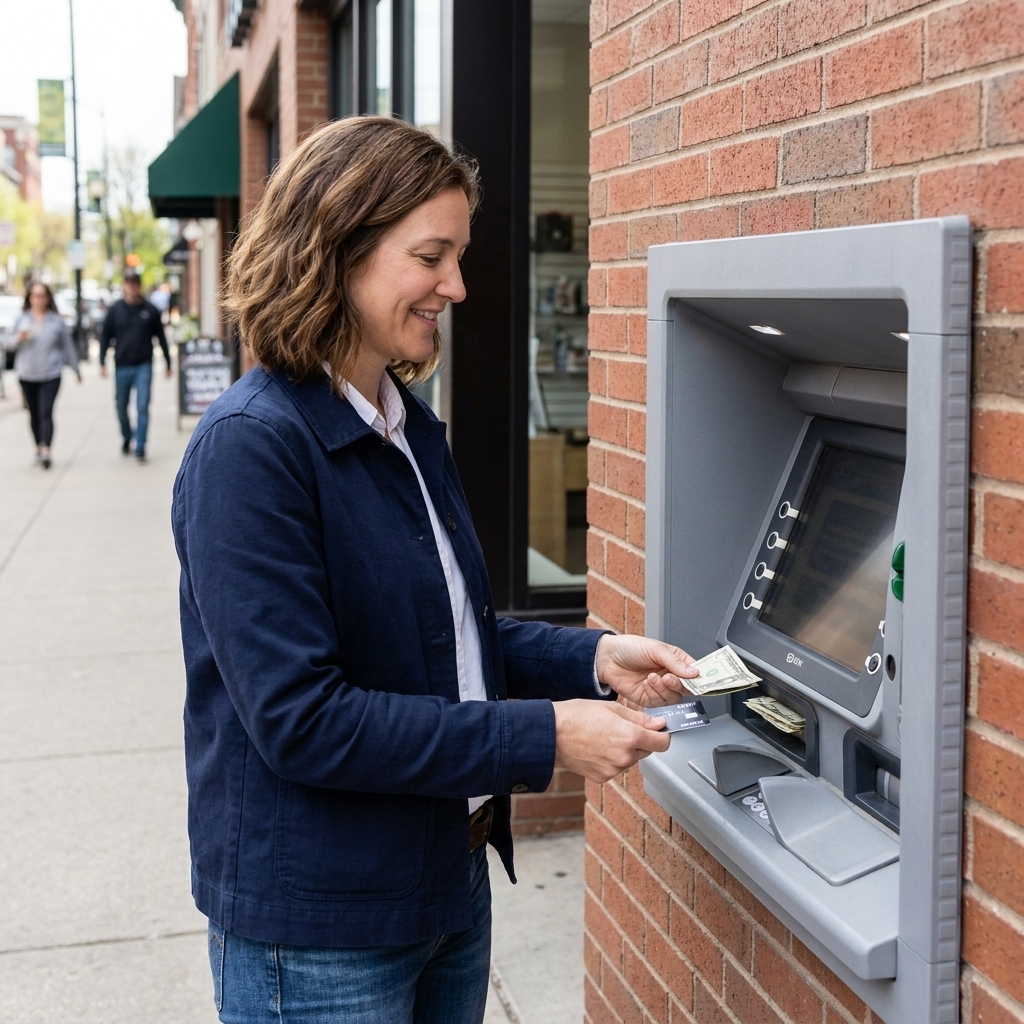
4) Out-of-network ATM fees
ATM fees are sneaky because there are often two:
- Your bank’s out-of-network fee
- The ATM owner’s surcharge
That small cash withdrawal can quietly cost a lot more than you planned. If you do it a few times a month, it adds up fast.
How to get it waived
Some banks reimburse a limited number of ATM fees each month. Others may offer a one-time courtesy credit if you ask. Policies vary, so it’s worth checking your fee schedule or asking support to confirm what your account includes.
Phone script: “Hi, I’m reviewing my account and I see ATM fees totaling $14 from June 1 through June 15. Is my account eligible for ATM fee reimbursements? If not, can you credit these back as a courtesy this time, and tell me the best way to avoid them going forward?”
Better fix than repeatedly asking for credits: Ask your bank which ATM network is free, then save it in your maps app. If cash is a weekly habit, consider switching to a bank or credit union that reimburses fees.
5) Paper statement and service fees
This category is the most annoying because the fees can feel random: paper statements, mailed checkbooks, cashier’s checks, stop payments, live teller fees at some online banks, account research fees, expedited card replacement, and more.
They are often avoidable, but only if you know they exist and how your bank labels them.
How to spot it
Look for small line items like paper statement, statement delivery, stop payment, or cashier’s check fee.
How to get it waived
If you were never clearly warned, or you didn’t realize you were opted into paper statements, ask for a refund and switch to electronic delivery immediately.
Phone script: “Hi, I was charged $3 for a paper statement on July 10. I didn’t realize there was a fee for that service. Can you waive it this time and help me update my account settings so I don’t get charged again?”
If it was a one-off service fee, keep it specific.
“Hi, I was charged $15 for a cashier’s check on August 3. I didn’t realize there was a fee for that. Can you waive it as a courtesy this time? If I need this again, what is the lowest-cost way to do it with my account?”
Tip: If you need official payments regularly (rent, deposits, etc.), ask about lower-cost options like ACH transfers, your bank’s online bill pay (mailed check), or money orders. If a cashier’s check is truly required, a different bank or credit union may simply charge less.
Other fees to watch
If you want to do a quick sweep of your checking account for “surprise” charges, these are common ones people miss:
- Wire transfer fees (sending and sometimes receiving)
- Foreign transaction and international ATM fees (especially while traveling)
- Inactivity or dormancy fees (more common on older accounts or certain banks)
- Stop payment timing and renewals (some stop payments expire and can renew with another fee)
- Check order fees (including expedited shipping)
A simple refund formula
When you are nervous, it’s easy to overexplain. You do not need a long story. Use this structure:
- Identify the fee and date
- State that you want it waived as a courtesy
- Confirm what to do to prevent it next time
“I’m calling about a fee that posted on September 12 for $15. Can you waive it as a courtesy? And can you tell me the best way to avoid it going forward?”
Limits to know
Even when a bank is willing to help, there are a few common boundaries:
- Timing matters: some banks will not reverse fees that are older than 30 to 60 days.
- Account status matters: some require the account to be back in the positive before they will consider a refund.
- Frequency matters: you might get one courtesy refund per 6 to 12 months, or a limited number per calendar year.
If they say no
A no is often just the first rep following policy. Stay polite and keep it moving.
Ask for a supervisor
“I understand. Could you please escalate this request to a supervisor to see if there’s any flexibility?”
Ask about policy limits
“Is there a policy like one courtesy refund every 12 months or a reimbursement program I might qualify for?”
Ask about account options
“What checking account option would help me avoid this fee completely?”
If your bank is consistently expensive and inflexible, it might be a sign to switch. You deserve a checking account that does its job quietly, not one that charges you for being human.
Good to know
Courtesy refund vs. dispute
A courtesy refund is you asking the bank to be flexible. If the fee was triggered by an actual bank error or unauthorized activity, ask how to file a dispute instead of (or in addition to) requesting a courtesy credit.
Overdraft settings do not cover everything
Even if you opt out of overdraft coverage for debit card and ATM transactions, checks and ACH payments may still overdraw your account. Ask your bank exactly what happens when funds are not available.
Quick FAQ
How many times will a bank waive a fee?
It varies. Some banks allow occasional courtesy reversals, some have strict limits, and some rarely do it at all. If you have a long history with the bank or a steady direct deposit, mention it.
Is it better to call or use chat?
Either can work. Chat can be easier because you can paste the script and keep a written record of what they said.
Will asking for a fee refund hurt my account?
In general, no. You are asking for a courtesy refund, not accusing anyone of fraud. Keep it calm and factual.
Your next 10-minute win
If you take nothing else from this, do this today: open your banking app, scan the last 30 days for fees, and pick one fee to request back. Getting even $15 to $35 reversed is not just about the cash. It is proof you can advocate for yourself, and that is a skill that pays off forever.