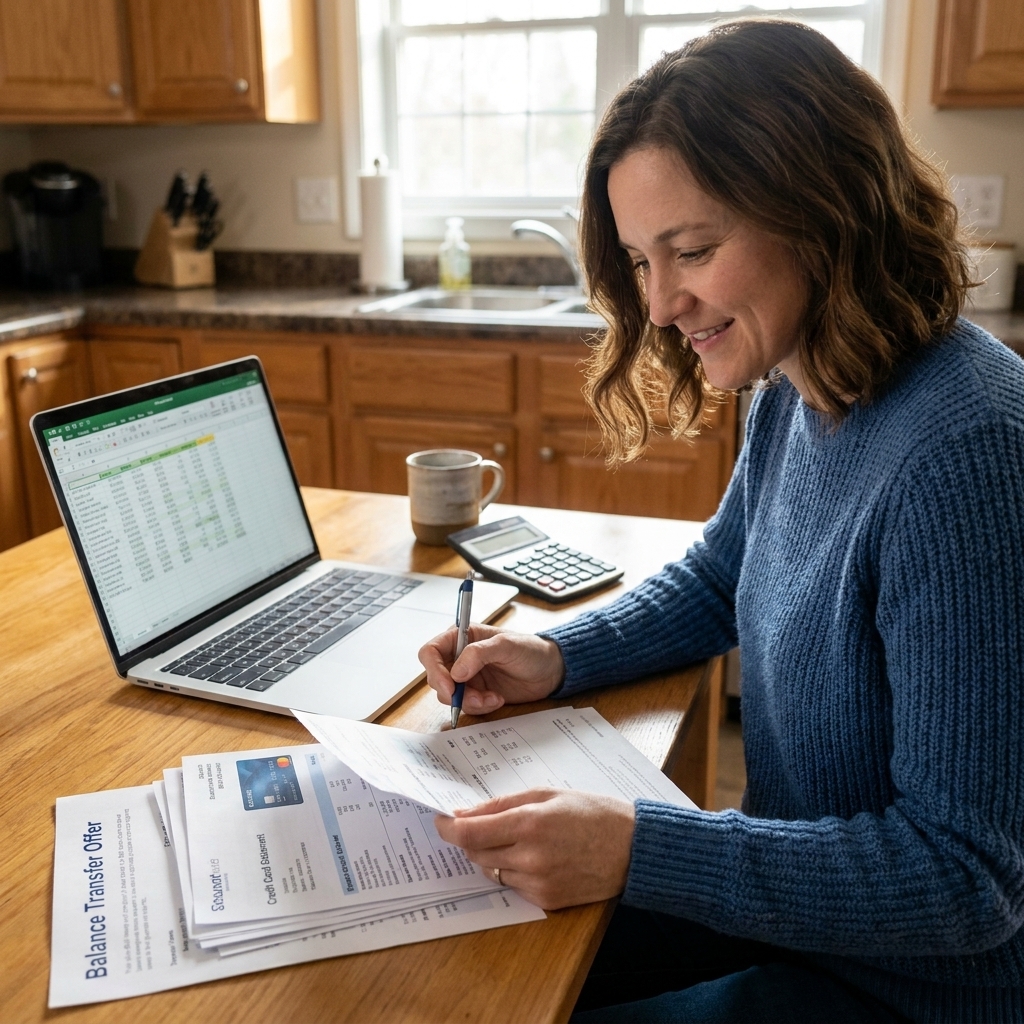
If you’ve been turned down for a “regular” credit card, you’re not alone. I’ve been there. When I was digging out of debt, my credit history felt like a bouncer at a club who took one look at me and said, “Not tonight.”
A secured credit card is often the easiest way back in. It looks and works like a normal credit card, but you put down a refundable deposit that protects the bank if you don’t pay. Used the right way, it can help you rebuild credit without the stress of complicated rules or fancy strategies.

Let’s walk through what a secured card is, how it actually builds credit, the sneaky fees that can ruin the deal, and what a realistic timeline looks like for upgrading to an unsecured card.
What a secured credit card is
A secured credit card is a credit card backed by a cash security deposit you pay upfront when you open the account.
That deposit is collateral. It reduces the lender’s risk, which is why secured cards are often available to people with:
- No credit history (brand new credit)
- Thin credit (not much on your report)
- Damaged credit (late payments, collections, high utilization)
- Recent bankruptcy or other major negative marks
Many secured cards report to the credit bureaus just like unsecured cards, but not all do, and some report to only one or two bureaus. The reporting is what can help your credit score improve over time, so it’s something you should confirm before you apply.
Secured vs. prepaid (don’t mix these up)
This is one of the biggest points of confusion.
- Secured credit card: You borrow money from the card issuer (up to your credit limit), then pay it back. Often reports to credit bureaus.
- Prepaid card: You spend your own money that you load onto the card. Usually does not build credit because it doesn’t report as a credit line.
If your goal is building credit, you want “secured credit card,” not “prepaid.”
How secured cards work
Here’s the typical flow:
- You apply. Approval standards are usually easier than with unsecured cards.
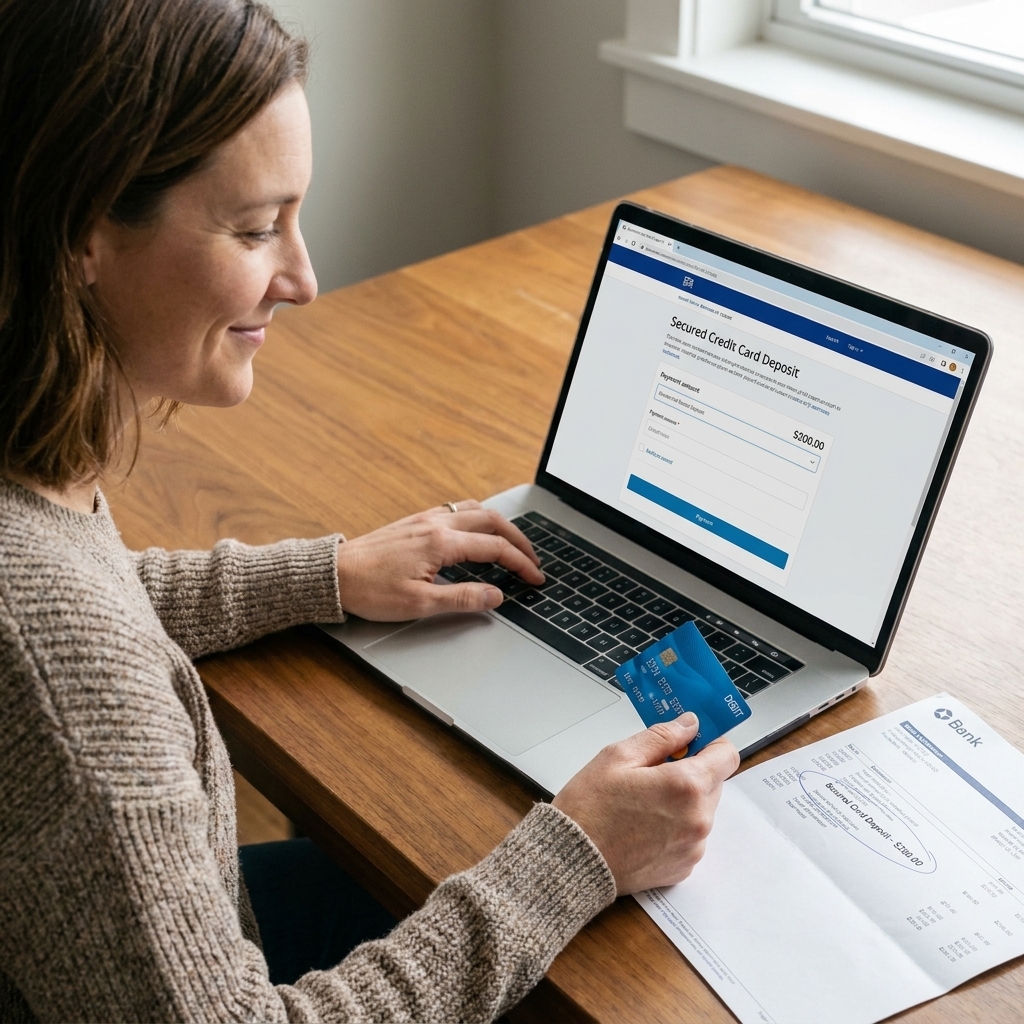
- You pay a deposit. Common deposits are $200 to $500, but some cards allow more.
- Your deposit often becomes your credit limit. Put down $300, your limit is often $300. Some issuers may offer an increase later, but policies vary. Many require you to add more deposit to raise your limit.
- You use it like any credit card. Purchases, a monthly statement, and a due date.
- You make payments. If the card reports, your payment history gets sent to the credit bureaus.
- If you close the account in good standing or “graduate,” you get your deposit back.
Your deposit is not the same thing as your monthly payment. You still need to pay your bill on time, every time.
Where your deposit goes
Usually, the deposit is held in a separate account by the card issuer. You do not spend it. You also typically cannot access it while the account is open.
If you miss payments and the account closes with a balance, the issuer can use the deposit to cover what you owe. If you pay as agreed, the deposit is refundable.
How it helps your credit score
A secured card can impact your credit the same way an unsecured card can, mainly through:
- Payment history: On-time payments are the biggest win.
- Credit utilization: How much of your limit you use (lower is generally better).
- Age of credit: Keeping the account open over time can help.
- New credit inquiry: Applying may cause a small, temporary dip from a hard inquiry.
One important note: you only get these benefits if the issuer reports to at least one major credit bureau. Ideally, they report to all three. If the card doesn’t clearly say this in writing, treat that as a problem.
Statement close date vs. due date
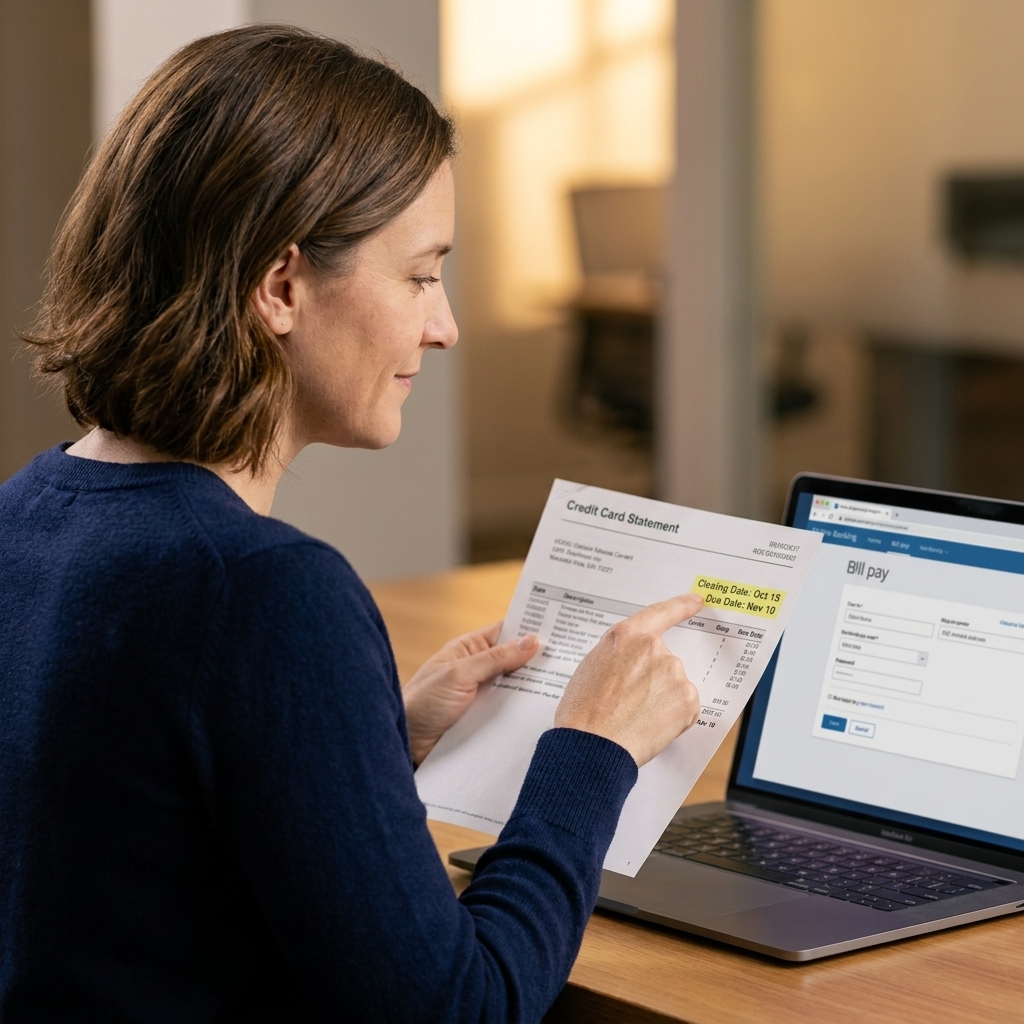
Beginners get tripped up here, so let’s make it simple. The statement close date is when your billing cycle ends and your balance is “captured” on a statement. The due date is when your payment is required. Example: your statement might close on the 5th, and the due date might be the 30th.
How to build credit safely
My favorite secured card strategy is the boring one. Boring is good. Boring is safe.
Step 1: Pick one small bill
Choose something you would pay anyway, every month. Examples:
- A streaming subscription
- Your phone bill
- A small auto insurance payment
- A tank of gas once a month
Keep it simple. The goal is consistent, on-time reporting, not racking up rewards points.
Step 2: Keep your balance low
If your credit limit is $300, 10% is $30. That sounds tiny, but small balances can still build credit.
Utilization “rules” are really just practical heuristics, and different scoring models can behave differently. A useful guideline:
- Great: 1% to 9% utilization
- Fine: Under 30%
- Avoid: Regularly maxing it out, even if you pay in full
Also, 0% utilization can be totally fine. Some people see slightly better results when a small balance reports, but you do not need to play games here. Consistency matters more than perfection.
If your limit is low (common with secured cards), it does not take much spending to accidentally spike utilization. That’s why one small bill works so well.
Step 3: Pay early, not only on the due date
Most issuers report the balance from your statement (or around your statement closing date). So if your statement closes with a high balance, that high balance may be what shows up on your credit report, even if you pay it off later. Some issuers report on different schedules, which is another reason to keep things simple and keep balances low all month.
Two easy options:
- Pay weekly (mini payments keep the balance low)
- Pay twice a month (for example, mid-month and again right before the statement closes)
If you want the simplest setup, turn on autopay for at least the minimum and then make an extra payment manually when you can.
Step 4: Never carry a balance “for your credit score”
You do not need to pay interest to build credit. Paying interest is not a credit-building requirement, it is just expensive.
Aim to pay the statement balance in full each month if possible. If you are still paying down other debt and cash is tight, at least pay on time and keep usage low.
Fees to watch
This is where secured cards can go from helpful to heartbreaking. Some are totally reasonable. Others are fee machines dressed up as a second chance.
Fees that are common
- Annual fee: Some secured cards charge one. A small annual fee can be worth it if the card reports broadly and has a clear upgrade path. If you can find a no-annual-fee option, even better.
- APR (interest rate): Secured cards often have high APRs. That only matters if you carry a balance. Plan to pay in full.
- Late payment fee: Avoidable, but important to know. A late payment can also damage your credit.
Fees that should make you pause
These are the ones that can drain your deposit or quietly make the card less useful:
- Application or processing fees: Paying upfront just to open the account is a red flag for many cards.
- Monthly maintenance fees: Paying every month for the privilege of having the card can add up fast.
- Account setup fees: Another common “fee stack” tactic.
- High authorized user fees: If adding a family member costs a lot, skip it.
One extra gotcha: with some cards, certain fees can be charged against your available credit limit. If your limit is $200 and a fee hits the account, you can start out with less usable credit than you expected, which can also push utilization up.
Transaction fees that can surprise you
- Foreign transaction fees: If you travel, this matters.
- Balance transfer fees: Usually not relevant for secured cards, but still possible.
- Cash advance fees: Avoid cash advances in general. They can start accruing interest immediately and come with extra fees.
How to protect yourself
Do a quick “fee audit” before you submit an application:
- Confirm the card reports to all three major credit bureaus (or at least which bureaus it reports to)
- Read the fee table and look for monthly fees and processing fees
- Confirm the minimum deposit and whether deposits can be increased later
- Confirm the deposit is refundable and ask about the refund timing (how long it takes after closing or graduating)
- Look for a clear graduation or upgrade policy
If the terms feel vague, or the fee list is long, it is okay to walk away. You are not desperate. You are rebuilding.
Choosing a secured card
Not all secured cards are created equal. Here’s what I would personally prioritize if I were starting over.
My checklist
- Reports to all three bureaus (and says so clearly)
- No monthly maintenance fee (or at least minimal total fees)
- Reasonable deposit amount you can afford without draining your emergency fund
- Online account access with easy payment options
- A real graduation path to an unsecured card (or clear info that it does not graduate)
- Ability to increase your limit over time (either by adding deposit or issuer review)
How much should you put down?
Only deposit what you can afford to have tied up for a while.
My rule of thumb: Do not use your last dollars for a deposit. If the deposit wipes out your tiny emergency cushion, the first car repair could push you into missed payments, and that defeats the whole purpose.
If you can swing it, a slightly higher deposit can make it easier to keep utilization low. But a smaller deposit is fine if you keep spending minimal.

Credit union secured cards
Many credit unions offer secured cards with lower fees and friendlier terms than some big-name subprime cards. If you have a local credit union, it is worth checking their options.
Getting your deposit back
There are two common ways you get your deposit back:
- You close the account in good standing: You pay the balance to $0, close the card, and the issuer refunds the deposit.
- You graduate to an unsecured card: The issuer upgrades you, refunds your deposit, and your account may stay open as an unsecured card (this depends on the issuer).
Graduation timeline
Some people get reviewed for graduation around 6 to 12 months of on-time payments, but it varies a lot by issuer and by your credit profile. Also, some secured cards do not graduate at all, which is why it’s smart to ask about the policy upfront.
In real life, here’s a reasonable timeline to plan around:
- Months 1 to 3: Focus on perfect payments and low utilization. You might see small score movement.
- Months 4 to 6: Credit history starts to look more stable. Some issuers begin considering upgrades.
- Months 7 to 12: Common window for graduation, or for you to qualify for a basic unsecured card elsewhere.
- 12+ months: If you have not graduated, ask about criteria, request a product change if available, or consider an unsecured card with another issuer if your profile is stronger.
What issuers look for
Graduation is not magic. It is usually based on:
- On-time payment history with that card
- Responsible balances (not constantly maxed out)
- No recent major negatives elsewhere on your credit
- Income and overall debt levels (sometimes)
Will graduation raise your score?
Graduation itself does not automatically boost your score. But it can help indirectly if it leads to:
- A higher credit limit (lower utilization)
- More favorable terms
- Less temptation to close the account (keeping your credit setup stable)
Moving to unsecured
Your goal is not just to “get an unsecured card.” Your goal is to build a stable credit setup you can keep for years without stress.
Option A: Graduate with your issuer
If your secured card has a clear graduation path, this is often the simplest route.
- Keep using the card lightly
- Pay on time
- Ask customer service what their graduation criteria and timeline are
Option B: Apply elsewhere
Sometimes your secured issuer is slow to graduate accounts, or your card may not have a graduation path at all. If you’ve had 9 to 12 months of great history, it may be time to apply for a basic unsecured card with no annual fee.
Two tips before you apply:
- Check your credit reports for errors that could be dragging you down.
- Be strategic with applications. Too many hard inquiries in a short time can hurt.
Should you close the secured card?
Not automatically. Closing a card can raise your utilization right away if it reduces your total available credit.
As for account age, it depends on the scoring model. With many FICO scores, a closed account can continue to age on your report for years. Still, keeping an older account open can be helpful for simplicity and long-term stability, especially if it has no annual fee.
If the secured card has no annual fee and you can manage it responsibly, keeping it open with a tiny recurring charge can help your credit profile stay strong.
If it has hefty fees, closing it after you have a better card can be the smarter move. Just make sure the balance is $0 before closing, and confirm your deposit refund timeline.
Mistakes that keep you stuck
I want you to actually graduate. These are the most common “oops” moments that can slow everything down:
- Maxing out the card because the limit is low
- Missing a payment even once
- Only paying the minimum and carrying a balance month to month
- Applying for too many cards while rebuilding
- Choosing a card with monthly fees that eat your budget
- Closing the card too soon when it is your only credit line
If any of these have already happened, it’s not the end. The fix is usually simple: go back to small charges, autopay, low balance, repeat.
Other ways to rebuild
If a secured card deposit is tough right now, or you want more than one tool working for you, here are a few other options that can help (when used carefully):
- Credit-builder loans: Often offered by credit unions and community banks. You make fixed payments, and the lender reports them.
- Authorized user: If someone you trust adds you to a well-managed card (low balance, on-time payments), it can help your credit profile. Do this only with someone responsible.
- Rent and utility reporting: Some services report rent or bill payments to certain bureaus. It can be a boost, but check fees and which bureaus they actually report to.
You do not need to do all of these. One or two consistent, boring wins are usually enough.
Quick FAQ
Does a secured credit card build credit fast?
It can build credit steadily, but “fast” depends on what is currently on your report. If you are starting from scratch, you may notice meaningful progress within 6 to 12 months. If you are rebuilding after missed payments, it can take longer because negative marks weigh heavily for a while.
Can I get denied for a secured credit card?
Yes. Requirements are looser, but issuers may still check identity, banking history, or recent delinquencies. Some secured cards also require you to meet basic income or residency rules.
Is the deposit refundable?
Typically yes, as long as you pay what you owe. If you close the account with a balance, the issuer can use your deposit to cover it. Always confirm the refund rules and timing in the card’s terms.
What if I cannot afford a big deposit?
Start with the minimum deposit you can comfortably afford while keeping some cash set aside for emergencies. Then keep your monthly spending tiny so utilization stays low.
Can I increase my limit on a secured card?
Often, yes. Some cards let you add to your deposit to raise your limit. Others may increase your limit after several months of on-time payments, but that is issuer-specific. Always check the policy before you count on it.
My bottom line
A secured credit card is not a punishment for past mistakes. It’s a tool. If you pick a card with reasonable fees, confirm it reports to the credit bureaus, keep your balance low, and pay on time like it’s your job, you can build real momentum.
If you want the simplest game plan, here it is:
- Deposit an amount you can afford without draining your emergency fund
- Put one small recurring bill on the card
- Turn on autopay for the minimum, then pay it down early when you can
- Aim for low utilization (under 10% if possible, under 30% at minimum)
- After 6 to 12 months, ask about graduation or consider an unsecured starter card
That’s it. No hacks. No shame. Just steady progress.