Buy Now, Pay Later is sold as “easy.” And in the moment, it is. The problem is what happens after: four payments turns into twelve, one plan turns into six, and suddenly your next paycheck already belongs to Past You.
No shame here. BNPL is designed to feel painless at checkout. If you are stuck in a pile of plans right now, you do not need a lecture. You need a clear list, a payoff order, and a way to stop new plans from sneaking in.
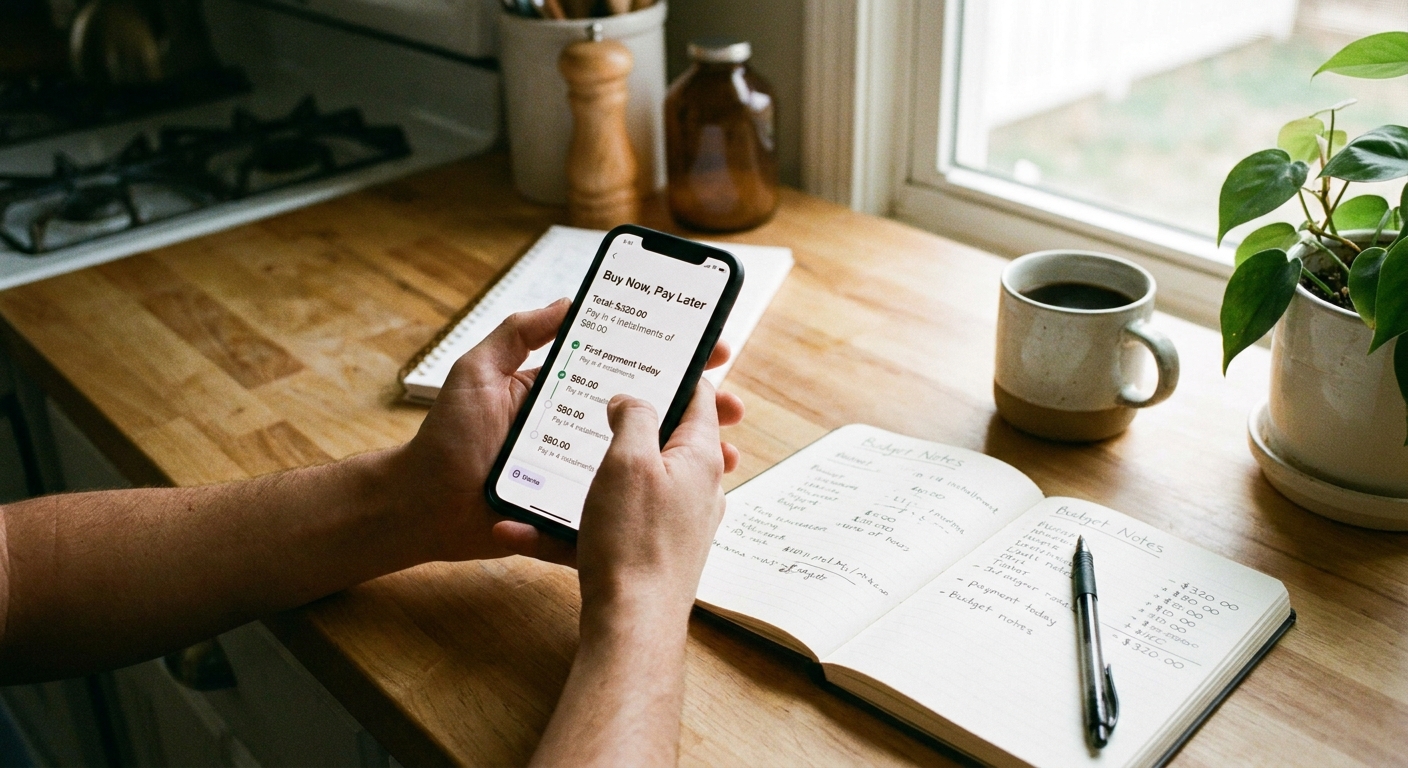
Let’s walk through a simple, no-nonsense way to get out of BNPL debt without missing payments or wrecking your budget.
Know what you are dealing with
BNPL debt is tricky because it is often spread across multiple apps and stores. It can look like “small” payments, but those payments stack fast. Also, “BNPL” can mean a few different things: some plans are pay-in-4 style installments, and some are longer-term loans with monthly payments and interest.
Do a BNPL inventory in 20 minutes
Set a timer and pull up:
- Every BNPL app you use (Affirm, Afterpay, Klarna, Zip, PayPal Pay in 4, store-specific plans, etc.)
- Your email search for keywords like “payment due,” “installment,” “Afterpay,” “Klarna,” “Affirm,” “Pay in 4,” and the store names you used
- Your bank and card statements for the last 60 days (look for recurring, same amount withdrawals)
Now create one master list. You can use a note on your phone, a spreadsheet, or a paper page. The tool does not matter. The visibility does.
What to write down for each plan
- Store and item (optional, but it helps you spot patterns)
- Provider (which BNPL company is collecting)
- Remaining balance
- Payment amount and payment frequency (weekly, every two weeks, monthly)
- Next due date
- Late fee and penalty terms (policies vary a lot by provider and location, so check your specific plan)
- Interest (some plans are 0%, some are not)
If you only do one thing today, do the list. Anxiety thrives in the unknown. A list turns a foggy problem into a set of solvable line items.
Pause new BNPL plans
You cannot sustainably pay off BNPL if new plans keep getting added. This is the part that feels restrictive, but it is temporary and it works.
Create a 30 day “no new plans” rule
For the next 30 days, do not start a new BNPL plan for anything. Not groceries, not clothes, not “it’s on sale,” not gifts. If you need it, buy it with money you already have. If you do not have the money, it is a “not right now.”
Make BNPL harder to use
- Remove BNPL apps from your home screen (or uninstall them if you can still make payments via web login)
- Delete saved cards from the BNPL apps
- Log out after each payment
- Unsubscribe from “limited time” promo emails and push notifications
This is not about willpower. It is about friction. The less convenient BNPL is, the less often it happens.
Pick a payoff strategy
BNPL is different from credit card debt because it is usually split into fixed installment schedules with specific due dates. With longer-term BNPL loans, you may also have interest and more traditional loan terms. Either way, your goal is twofold:
- Do not miss payments (fees and penalties vary, but missed payments can snowball fast)
- Free up cash flow by clearing plans one by one
Step 1: cover all scheduled payments first
BNPL plans typically have fixed payments, not “minimums,” but treat each scheduled payment like a minimum you must cover. In your budget, set aside enough to make every required payment due before your next paycheck(s).
Step 2: pick one plan for extra money
Once the upcoming scheduled payments are covered, send every extra dollar to one plan at a time. Two good options:
- Snowball method: Pay off the plan with the smallest remaining balance first. This clears accounts quickly and gives you momentum.
- Avalanche method: Pay off the plan with the highest interest or highest penalty risk first. This saves more money long term.
If your plans are mostly 0% interest, a BNPL-flavored snowball works well: prioritize the plan you can eliminate soonest so you free up that payment and roll it into the next plan.
A simple BNPL priority shortcut
If you feel stuck, separate two decisions: staying current, and paying down faster.
- Due-date triage (staying current): Always fund whatever is due next so nothing goes late.
- Payoff target (extra money): Put extra money toward (a) anything with interest, then (b) the smallest balance or the plan that ends soonest.
This keeps you stable while still making real progress.
Build a no-late-fees system
Late fees and penalties are where BNPL can get expensive and chaotic, but policies vary widely by provider and location. Your goal is still the same: boring consistency.
Put every due date in one place
Pick one calendar you actually look at:
- Your phone calendar
- A paper planner
- A budgeting app calendar view
Add each due date as a recurring event, and set reminders for:
- 3 days before (so you can move money if needed)
- Morning of (as the backstop)
Use autopay with a plan
Autopay can be a lifesaver, but only if the money is there on the pull date. Manual pay can work too, but it needs a consistent routine because it increases missed-payment risk if life gets busy.
- If your income is steady: autopay plus a small buffer is usually the lowest-stress option.
- If your income is irregular: consider manual pay with calendar reminders, plus a same-day habit (pay as soon as you get paid, not on the due date).
If you can, keep a small buffer in the payment account. Even $50 to $100 can prevent an overdraft chain reaction.
One more win: if your BNPL payments are pulling from multiple places, try to route them through one checking account or one card that you keep funded. Fewer moving parts means fewer surprises.

Build a payoff budget
The easiest way to keep BNPL from taking over is to give it a clear lane in your budget.
Create a BNPL category like a bill
For now, BNPL is not “optional spending.” It is a fixed obligation, like your phone bill. In your budget, add a line called BNPL Payments and fund it first after essentials.
Use a simple paycheck split
If you are paid every two weeks, try this:
- Paycheck 1: cover BNPL payments due in the next 14 days, plus a small extra toward your target plan
- Paycheck 2: do the same, then increase the extra payment if you have room
If you are paid weekly, fund the next week’s BNPL payments every payday. Weekly schedules can sneak up fast.
Find quick cash flow without burning out
You do not need extreme cuts. Look for repeatable wins:
- Pause nonessential subscriptions for 60 days
- Switch one or two takeout meals to simple groceries
- Sell a few unused items (this pairs nicely with the “why did I even buy this” BNPL regret pile)
- Call for a lower internet or phone plan
The goal is to create a little extra each week so your payoff snowball can roll.
If you cannot afford the next payments
If your inventory shows you are underwater, take action before you miss payments. Early action gives you the most options.
1) Contact the provider before the due date
Open the app and look for support options like payment date changes, extensions, hardship programs, or the ability to reschedule. Not every company offers this, but it is worth asking. Be direct: you want to avoid delinquency and you can pay, just not on the current schedule.
2) Reduce the number of plans you are juggling
If you have multiple plans with tiny balances, paying off one or two quickly can reduce the chaos and free up room for the rest. Even clearing a $40 remaining balance can remove a weekly payment.
3) Know what missed payments can trigger
Depending on the provider and product, a missed payment can lead to late fees or other penalties, account freezes (so you cannot use BNPL again), collections activity, and in some cases credit reporting. The best damage control is simple: communicate early, stay current on essentials, and keep the smallest number of accounts from going late.
4) Consider consolidation only if it truly fits
Some people look at a personal loan or 0% balance transfer card to simplify payments. This can help, but it can also backfire if it becomes a reason to keep spending.
- Consolidation can make sense if it lowers your total monthly payments, reduces interest, and you are committed to stopping new BNPL.
- Consolidation is risky if it frees up your BNPL accounts and you start new plans again.
Also, not all BNPL balances can be paid with a credit card or moved like a traditional balance transfer. Before you apply for anything, confirm the payoff method your BNPL provider accepts and whether the math actually improves your monthly cash flow.
5) Protect essentials first
If it is a choice between rent and a BNPL payment, rent wins. Always. If missing a BNPL payment is unavoidable, communicate early with the provider and prioritize keeping housing, utilities, food, and transportation stable.
Stop using BNPL for everyday spending
Most BNPL spirals happen when it shifts from “once in a while” to “normal.” Groceries. Household basics. Kids’ stuff. Pet food. When BNPL becomes the plan, your budget never catches up.
Use a sinking fund for your trigger categories
A sinking fund is just setting aside a little money each paycheck for an upcoming expense. Common BNPL categories and an easy replacement:
- Clothes: $20 to $50 per paycheck in a “clothing” fund
- Gifts: $10 to $30 per paycheck year round
- Home stuff: $25 per paycheck for towels, storage, small fixes
- Beauty: a set monthly amount you can spend guilt-free
BNPL feels like a solution because it spreads cost over time. A sinking fund does the same thing, but without fees or stress.
Use a 48 hour rule for nonessentials
If it is not food, meds, or true household basics, wait 48 hours. Put it on a list. Most BNPL purchases are impulse purchases with a payment plan attached.
Keep one checkout question
Before you hit BNPL, ask:
Would I buy this if I had to pay in full today?
If the answer is no, it is not a “pay later” purchase. It is a “cannot afford right now” purchase. That clarity is powerful.
Payoff example
Let’s say you have:
- Plan A: $80 left, $20 weekly
- Plan B: $240 left, $60 every 2 weeks
- Plan C: $500 left, $125 monthly
You can afford all scheduled payments, plus $40 extra per paycheck.
A BNPL snowball could look like:
- Cover all scheduled payments due before your next paycheck.
- Send the extra $40 to Plan A until it is gone (likely within 1 to 2 pay cycles).
- Now roll the freed $20 weekly (or equivalent) plus your extra $40 toward Plan B.
- Then roll everything into Plan C.
This is how BNPL goes from “I will never catch up” to “oh, I can actually breathe again.” You are turning multiple drains into one focused payoff stream.
FAQs
Is BNPL debt the same as credit card debt?
It is debt, but it behaves differently. Credit cards are revolving balances with minimum payments. BNPL is typically fixed installments with specific due dates. Some BNPL products are also longer-term loans with interest and more traditional repayment schedules. The risk with BNPL is juggling multiple schedules and getting hit with fees or other penalties, plus the temptation to keep opening new plans.
Does BNPL hurt your credit?
It depends on the provider, the specific product, and where you live. Some plans involve credit checks, some may be reported to one or more credit bureaus, and unpaid balances can be sent to collections. Even when a plan is not reported, missed payments can still lead to fees, collections activity, and serious cash flow strain. If you are unsure, check your provider’s disclosures in the app and monitor your credit reports.
Should I pay BNPL off early?
If there is no prepayment penalty, paying early can be a great way to simplify your life and reduce the chance of missed payments. Just make sure you keep enough cash on hand for essentials and upcoming bills.
What if I returned an item but the plan is still active?
Follow up immediately with both the retailer and the BNPL provider. Keep receipts and return confirmations. Returns can take time to process, and you do not want a payment to go late while the refund is pending. If the provider is still drafting payments, keep paying until you see the balance adjusted, then ask support to correct it using your proof of return.
A simple 7 day plan
- Day 1: Make your BNPL master list.
- Day 2: Put all due dates in one calendar with reminders.
- Day 3: Set your “no new BNPL for 30 days” rule and remove app shortcuts.
- Day 4: Build a BNPL budget category and fund the next two weeks of payments.
- Day 5: Choose your payoff target plan and make an extra payment.
- Day 6: Find one quick cash flow win and apply it to your target plan.
- Day 7: Start one sinking fund for your biggest BNPL trigger category.
BNPL debt feels sneaky because it comes in tiny pieces. You get out the same way: small, consistent steps that add up fast.
If you want a mantra to carry with you, this is mine: clarity, then consistency. List it. Schedule it. Pay it down one plan at a time. You are not behind forever. You are just in the middle of the fix.