Building credit from scratch can feel like trying to get hired for a job that requires experience you do not have yet. The good news is that you do not need to go into debt to build a strong credit history. You just need one or two beginner-friendly accounts, a few simple rules, and a little time.
In this guide, I will walk you through the steps I recommend to Frugal Grid readers who are starting at zero. We will keep it practical, low-risk, and focused on building credit without paying interest.

First, confirm you are truly starting from scratch
Before you apply for anything, take a few minutes to make sure there is not already a credit file with your name on it. You might have student loans, a car loan cosigned years ago, or a past-due bill that went to collections.
Check your credit reports (free)
In the U.S., you can get your official credit reports for free through AnnualCreditReport.com (the federally authorized site). Pull your reports from the three major bureaus (Equifax, Experian, TransUnion) and look for:
- Any open accounts (credit cards, auto loans, student loans)
- Any late payments you did not know about
- Collections (including utility or cell bills that went unpaid and were sent to collections)
- Incorrect personal info (wrong address, name spelling)
Quick clarification: credit reports are what you can get free through that site. Credit scores are sometimes free (many banks and apps offer them), but not always, and different score types can look different.
If you find errors, dispute them with the bureau that is reporting them. Disputes are for inaccurate information. Disputing a correct negative mark will not make it disappear.
Know your goal: a thin file, not perfection
When you are brand new, your objective is simple: get one account that reports to the credit bureaus and manage it responsibly. A higher score comes later as your history grows.
How credit scores get built
You do not need to memorize scoring formulas, but you do need to understand what behaviors move the needle.
- Pay on time. This is the biggest deal. One late payment can do real damage.
- Keep credit card balances low. Your balance compared to your limit is called utilization.
- Keep accounts open. Older accounts help you over time.
- Apply for credit sparingly. A lot of applications in a short period can look risky.
- Mix helps, but later. Credit cards plus an installment loan can help long-term, but do not force it.
Chloe tip: Credit building is mostly about proving you are boring. Boring is good. Boring gets you approved.
Step 1: Choose your starter path
To build credit from scratch, you only need one good entry point. Here are three beginner-friendly options, ranked from most common to most situational.
Option A: Get a secured credit card
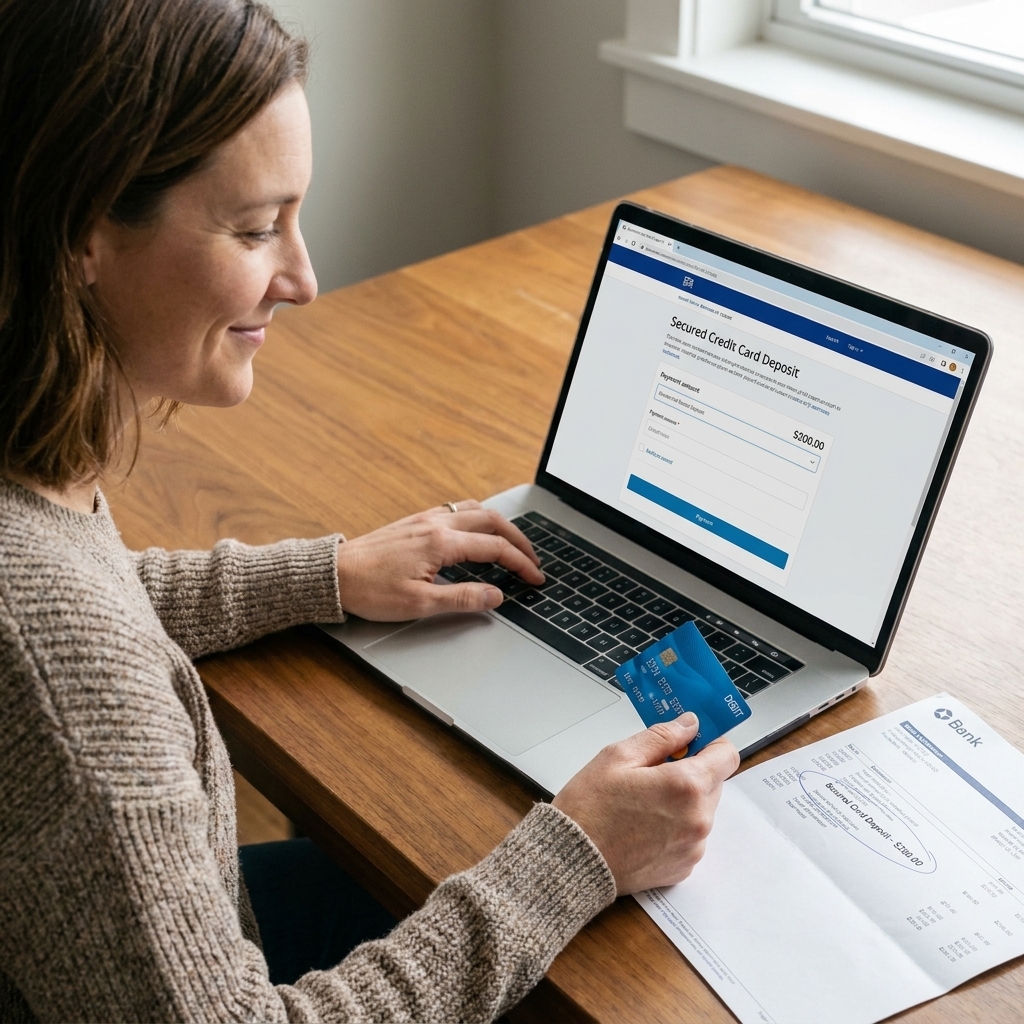
A secured credit card works like a regular credit card, except you put down a refundable deposit first. In many cases, that deposit becomes your credit limit. Because the bank has your deposit, approvals are much easier for beginners.
What to look for in a secured card:
- Reports to all three credit bureaus
- No annual fee (or a very low one that you are comfortable with)
- A clear path to graduate to an unsecured card later
- Reasonable deposit requirement you can afford
- Clear fees and terms (skip cards with a pile of weird fees)
How much should your deposit be? If you can swing it, $200 to $500 is a solid starting range. A higher limit can make it easier to keep utilization low, but do not drain your emergency fund to do it.
Option B: Become an authorized user
If a trusted family member or partner has a long-standing credit card with on-time payments, they may be able to add you as an authorized user. In many cases, that account history can appear on your credit report and help you build credit faster.
Results vary: some issuers report authorized users differently, and some lenders or scoring models may discount authorized user accounts. It can still be a helpful boost, just do not treat it as guaranteed.
This works best when:
- The primary cardholder pays on time, every time
- The card has low utilization (they do not carry high balances)
- The account has been open for years
Important: you do not need to be handed the physical card. The goal is credit history, not spending power. If spending boundaries are complicated in your relationship, skip this option.

Option C: Use a credit-builder loan
A credit-builder loan is designed specifically to help you build payment history. Typically, the loan amount is held in a savings account while you make fixed monthly payments. After you finish the term, you receive the money (minus fees or interest, depending on the product).
What to check before you sign up:
- It reports to at least one major bureau (preferably all three)
- Fees are clearly explained
- The monthly payment fits your budget comfortably
- You understand when you receive the funds
This option is especially helpful if you are trying to avoid the temptation of revolving credit.
Step 2: Set your no-debt rules
If you choose a secured card or later get an unsecured card, these rules keep you from sliding into interest charges and stress. If you picked a credit-builder loan, you can skim this section and jump to utilization and monitoring.
Rule 1: Treat it like a debit card
Only charge what you already have in your checking account. A credit card is a payment method, not extra income.
Rule 2: Use a small recurring bill
For beginners, I love putting one small predictable bill on the card, like:
- A streaming subscription
- A low-cost phone bill if it is billed as a card payment you control (not a financed phone balance you are trying to pay off)
- A monthly parking pass
This keeps your account active and easy to manage.
Rule 3: Pay in full every month
To avoid interest, pay your statement balance in full by the due date. If you are anxious about it, you can make weekly or mid-month payments. It is not required, but it can keep balances low and your brain calm.
Rule 4: Turn on autopay
Late payments hurt. Autopay protects you from forgetfulness, travel, chaotic weeks, and life in general. Set autopay for at least the minimum payment, then manually pay the rest if you prefer.
Step 3: Keep utilization low
Utilization is how much of your credit limit you are using. For example, a $50 balance on a $200 limit is 25% utilization.
Beginner rule of thumb: try to keep your reported balance under 30% of your limit, and under 10% if you can do it comfortably. These are helpful targets, not magic requirements.
One detail that trips people up: your card often reports a balance based on your statement closing date, not the day you make a payment. That is why someone can pay in full every month and still see a balance reported.
Two easy ways to keep utilization low when your limit is small:
- Make an extra payment mid-month so the balance does not build up
- Keep your monthly charge small until you have a higher limit
Do not panic if a month reports higher than you wanted. Utilization can change month to month and often rebounds quickly when you pay down the balance.
Step 4: Give it time, then add one account
Most people do best starting with one account and managing it perfectly for a while. Once you have a few months of on-time payments, you can consider adding a second credit-building tool if it fits your life.
When to add a second account
- You have paid on time for at least 3 to 6 months
- Your budget feels stable
- You are not carrying any credit card balance
- You want a thicker credit file for future goals (apartment, car loan, mortgage)
What to add
- If you started with a secured card, you might later add a credit-builder loan for installment history.
- If you started as an authorized user, you might add a secured card that you control personally.
Avoid opening multiple accounts all at once. Slow and steady is the whole vibe here.
Step 5: Watch your credit
You do not need to refresh your score daily. What you do need is a basic system to catch problems early and celebrate progress.
What to monitor
- Payment history: are payments showing as on time?
- Balances: is your card reporting roughly what you expect?
- New accounts you do not recognize: could be identity theft or reporting errors
How often
Once a month is plenty for most people. Check your credit reports a few times per year, especially before a major application like an apartment or auto loan.
Do not waste effort on these
If your goal is building a credit file, these usually do not help:
- Debit cards and prepaid cards: great for budgeting, but they do not build credit by themselves.
- Most buy now, pay later plans: some providers report some loans now, but many do not report to the major bureaus in a way that helps you build consistent history.
- Regular phone and utility bills: they usually do not report unless you go delinquent and the account goes to collections. There are exceptions, but do not count on it as your main strategy.
If you want to use bills you already pay, look into rent or utility reporting services. Just watch for fees, confirm what they report (and to which bureaus), and make sure it fits your budget.
Predatory traps to avoid
When you are new to credit, you are also the easiest person to overcharge. Protect yourself with these quick checks:
- Be cautious with "no credit check" offers that come with heavy fees. Not every secured card is a good secured card.
- Read the fee list before you apply: annual fees, monthly maintenance fees, application fees, and weird processing fees can add up fast.
- Stick to reputable banks and credit unions whenever possible.
Mistakes that slow you down
Carrying a balance to build credit
You do not need to pay interest to build credit. Paying on time is what matters. You can pay in full and still build a strong score.
Applying for too many cards
Multiple applications can lead to denials and a messy start. Pick one solid beginner product and commit to it.
Closing your first card too soon
Your oldest account helps your credit age over time. If your first card has no annual fee, consider keeping it open long-term, even if you barely use it.
Missing one payment
If you miss a payment, pay as soon as you can. Then call the lender and ask if they can remove the late fee or refrain from reporting it as late as a one-time courtesy.
Also, do not panic if you are only a few days late. Lenders can charge a late fee after the due date, but credit bureaus typically do not see a payment as late unless it is 30+ days past due.
A simple 90-day plan
If you like checklists, here is a realistic starter timeline.
Days 1 to 7
- Pull your credit reports at AnnualCreditReport.com
- Choose one path: secured card, authorized user, or credit-builder loan
- Apply or get added
Days 8 to 30
- Set autopay
- Put one small recurring bill on the card (or make your first loan payment)
- Make a second payment mid-month if your limit is small
Days 31 to 90
- Continue on-time payments
- Keep balances low
- Check that the account is reporting correctly
- Do not open anything else unless there is a clear reason
After 90 days, you are not done, but you are officially building credit. That is a huge shift.
FAQ: Building credit from scratch
How long does it take to build credit from scratch?
It depends on the scoring model. Many people can get a FICO score after about 6 months of reported activity. Some free scores you see in apps may show up sooner. Building a strong credit profile takes longer, usually measured in years, because account age matters.
Do I need to carry a balance to build credit?
No. You can pay in full every month and still build credit. Carrying a balance just adds interest and stress.
What if I cannot qualify for anything?
Start with a secured card from a reputable bank or credit union, or look into a credit-builder loan through a community bank or credit union. If you have someone trustworthy, authorized user status can also be a bridge.
Will checking my own credit hurt my score?
No. Checking your own credit is typically a soft inquiry and does not harm your score. Applying for new credit can create a hard inquiry, which may have a small, temporary impact.
Should I get a store credit card to build credit?
Store cards can build credit, but they often come with low limits and high interest rates. If you are starting from scratch, a secured card or credit-builder loan is usually a safer first move.
The bottom line
Building credit from scratch is not about spending more. It is about proving you can handle a small amount of credit responsibly, month after month.
If you want the simplest, lowest-stress path: start with a secured credit card, put one small bill on it, turn on autopay, and pay it off in full. Give it time. Your future self trying to rent an apartment, finance a reliable car, or qualify for a mortgage will be very grateful.