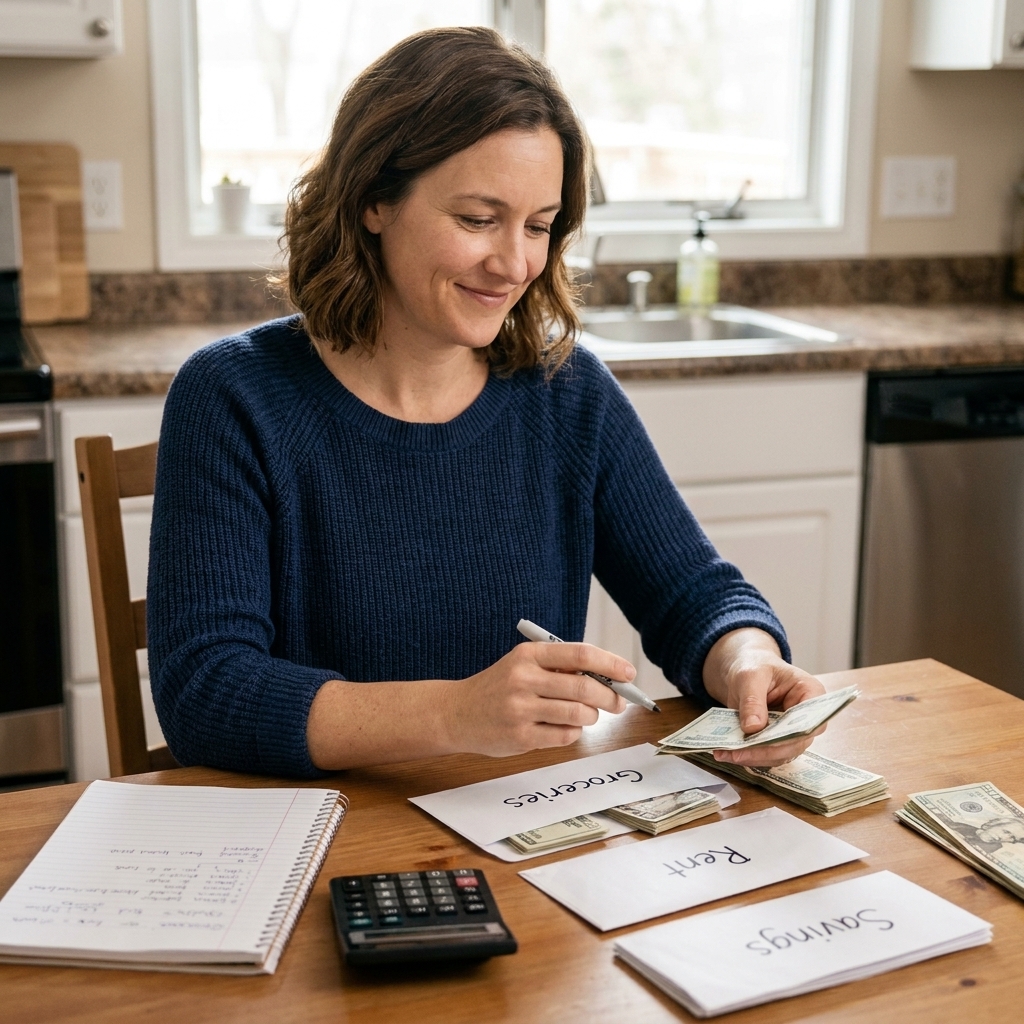
Most people don’t “fail” at budgeting because they’re bad with money. They quit because their budget is set up like an ultra-strict diet: unrealistic, joyless, and one unexpected life event away from collapsing.
I’ve been there. In my early twenties I was juggling student loans, credit cards, and a constant low-grade panic about rent. My breaking point was a declined debit card at the grocery store. The turning point was not willpower. It was building a budget that could survive real life.
Below are 10 budgeting mistakes I see constantly, plus exactly how to fix each one without turning your life into a spreadsheet prison.

1) You set limits too tight
What it looks like: You give yourself $150 for groceries, $0 for fun, and somehow expect your life to cooperate.
Why it derails your plan: A too-tight budget creates a rebound effect. You white-knuckle it for a week or two, then one stressful day turns into takeout, impulse buys, and “I’ll restart Monday.”
Fix: Use the “minimums + reality” method
- Step 1: Cover your non-negotiables first (rent, utilities, minimum debt payments, insurance).
- Step 2: Look at your last 60 to 90 days of spending in those flexible categories (groceries, gas, personal spending) and use the average as your starting point.
- Step 3: Trim by 5% to 10% at a time, not 30% overnight.
Budgets are training plans, not punishments. Start where you are, then tighten slowly.
2) You skip irregular expenses
What it looks like: Your budget is fine until the car registration, annual membership fee, back-to-school supplies, or a friend’s wedding shows up and nukes the month.
Why it throws you off: Irregular bills are predictable, just not monthly. If you don’t plan for them, they look like emergencies.
Fix: Create a sinking funds line
Make a short list of irregular expenses and save a little each month.
- Car maintenance
- Medical out-of-pocket
- Gifts and holidays
- Annual subscriptions
- Pet care
How to set it: If you expect $600/year in car maintenance, that is $50/month. Park it in a separate savings bucket if you can, so it doesn’t get “accidentally” spent.
Quick note: A sinking fund is for expected expenses (like tires). An emergency fund is for true surprises (like a job loss or ER bill).

3) You ignore small categories
What it looks like: You track rent and debt, but ignore gas station snacks, convenience-store drinks, app subscriptions, and random online orders.
Why it adds up fast: The small stuff is usually the flexible stuff. If you don’t see it, you can’t steer it.
Fix: Do a 7-day money audit
- For one week, write down every purchase, even the $3 ones.
- At the end of the week, group them into 5 to 8 categories.
- Pick one category to improve next week (not all of them).
If tracking every purchase sounds like a lot, start smaller: check your total spending in your top two “leak” categories every two or three days. The goal is awareness, not perfection.
4) You use best-case numbers
What it looks like: You assume you’ll spend $0 on eating out, you’ll never pay late fees, and your electricity bill will magically stay the same year-round.
Why it falls apart: Best-case budgets are fragile. Real budgets have padding.
Fix: Build margin into your plan
- Add a small buffer category: $50 to $200, depending on your income and how chaotic your month tends to be.
- If your bills fluctuate, choose an approach you can live with: budget a comfortable average plus 10%, or budget closer to your highest month if you prefer extra safety (knowing it can over-allocate and tighten other categories).
- If you come in under budget, roll the leftover into savings or debt.
Margin is what turns a budget from a fantasy into a system.
5) You treat it like rules
What it looks like: You go over in groceries, assume the month is ruined, and stop looking at your budget entirely.
Why you end up quitting: Real life changes weekly. Budgets that can’t be adjusted will be abandoned.
Fix: Do a 10-minute weekly check-in
- Look at what you spent.
- Decide what needs to change for the next 7 days.
- Move money between categories on purpose.
Going over in one category is not a moral failure. It is a signal to shift dollars elsewhere.
6) You budget zero fun
What it looks like: Your budget is all bills, debt, and guilt. Then you crack and spend $120 on a random Saturday because you’re tired of feeling deprived.
Why it backfires: A budget that doesn’t include joy will eventually be rebelled against.
Fix: Add guilt-free spending
Pick a number you can afford and defend it like it’s a bill. Even $10 to $25 per week counts.
- Coffee with a friend
- A thrift store run
- A happy hour appetizer
- Anything that makes the plan sustainable
The goal is not zero fun. The goal is planned fun.
7) You budget monthly only
What it looks like: You make a beautiful budget on the 1st, then don’t look at it until the 28th when you wonder where the money went.
Why it feels impossible: Monthly-only budgeting is like stepping on a scale once a month after eating whatever you want daily. The feedback is too late to be useful.
Fix: Budget by paycheck (or week)
If you get paid every two weeks, split your monthly expenses across those paychecks.
- Paycheck 1: rent, groceries, transit, minimum debt payments
- Paycheck 2: utilities, insurance, sinking funds, savings, fun money
This keeps you from spending early and hoping it works out later.

8) You ignore timing
What it looks like: You technically “have enough” income, but your bills hit before payday, so you rely on a credit card to bridge the gap.
Why it feels like you’re always behind: Budgeting is not just totals, it is timing. If the timing is off, you feel broke even when you are not.
Fix: Match bills to paydays
- List your bills in order of due date.
- List your paydays.
- Assign each bill to the paycheck that comes before it.
If due dates are the problem, call your providers and ask what your options are. Some companies will let you shift due dates or adjust a billing cycle. It is not guaranteed, but it is worth the ask.
9) You don’t automate
What it looks like: You mean to save, you mean to pay extra on debt, you mean to set money aside, but it only happens in “good months.”
Why it stays inconsistent: If it relies on motivation, it will be inconsistent.
Fix: Automate right after payday
- Set an auto-transfer to savings for the day after you get paid.
- Put bills on autopay when possible (or schedule payments through your bank).
- Automate minimum debt payments, then manually add extra when you can.
Automation is like putting your budget on rails. Less effort, fewer mistakes.
10) You change everything
What it looks like: You overhaul your entire lifestyle in one weekend: new grocery rules, no takeout, no online shopping, no fun, and a complicated tracking system. Then you burn out.
Why it doesn’t stick: Big change all at once creates decision fatigue. Decision fatigue creates quitting.
Fix: Pick one change for 30 days
Pick one focus based on what will help you most right now:
- If your bills are late: focus on cash flow and due dates.
- If you overspend casually: focus on daily tracking for two weeks.
- If debt is crushing you: focus on stopping new debt and building a tiny buffer.
- If you feel deprived: focus on a realistic fun money category.
Small wins build the confidence that keeps you going.
If the numbers don’t work
Sometimes budgeting is not the issue. Sometimes you are doing the math correctly and there just is not enough income to cover everything. If that is you, start with triage, not guilt.
Fix: Use a simple priority order
- Keep the basics covered: housing, utilities, food, and getting to work.
- Pay minimums where you can: especially on debts tied to necessities (like a car you need to get to work).
- Cut and negotiate: cancel or pause subscriptions, negotiate insurance, ask about hardship plans, and call on medical bills before you default.
- Get support if you qualify: community resources, assistance programs, and nonprofit credit counseling can help you make a plan.
- Increase income if possible: overtime, a second job, freelancing, selling unused items, or asking for a raise. Even a small bump can stabilize cash flow.
A budget can organize your money, but it cannot replace missing money. If you are short every month, the most “budget-friendly” move is to reduce fixed costs or increase income.
Debt vs emergency fund
If you are trying to decide where to focus, here is a practical rule that keeps most people from sliding backward: build a small starter emergency fund first (even $500 to $1,000), then focus on high-interest debt.
When you are ready to pay debt aggressively, you have two common options:
- Avalanche: pay extra on the highest interest rate first (saves the most money).
- Snowball: pay extra on the smallest balance first (fast wins and momentum).
Pick the method you will actually stick with. Consistency beats the “perfect” strategy you abandon.
A simple reset plan
If you’re overwhelmed, here’s a clean restart you can do in under an hour.
- Pull the last 30 days of transactions (bank and credit cards).
- Sort into categories (keep it simple: housing, food, transportation, debt, utilities, personal, subscriptions, savings).
- Set real targets using your average spending, not your wishful thinking.
- Add two safety nets: a buffer category and one sinking fund.
- Schedule a weekly 10-minute check-in on your calendar.
Your goal is not perfection. Your goal is a budget you will still be using three months from now.
Quick FAQ
What if my income is irregular?
Budget off your lowest predictable month and treat extra income as a separate plan: catch up bills, fund sinking funds, build a buffer, then extra debt payments. This keeps you safe in low months.
Should I use an app, a spreadsheet, or pen and paper?
Use whatever you will actually keep up with. Apps are great for tracking, spreadsheets are great for planning, and pen and paper can be surprisingly effective if you like simple. The best system is the one you will use on a Tuesday when you are tired.
How long does it take for budgeting to feel normal?
Many people find it takes a month or two to feel less awkward, and a few months to feel routine. The first few weeks are often the messiest because you’re learning your real spending patterns.
If you want the most important takeaway: budgeting works best when it’s flexible, realistic, and designed around your actual life. You do not need to be “good with money” to start. You just need a plan you can stick with when life gets a little loud.