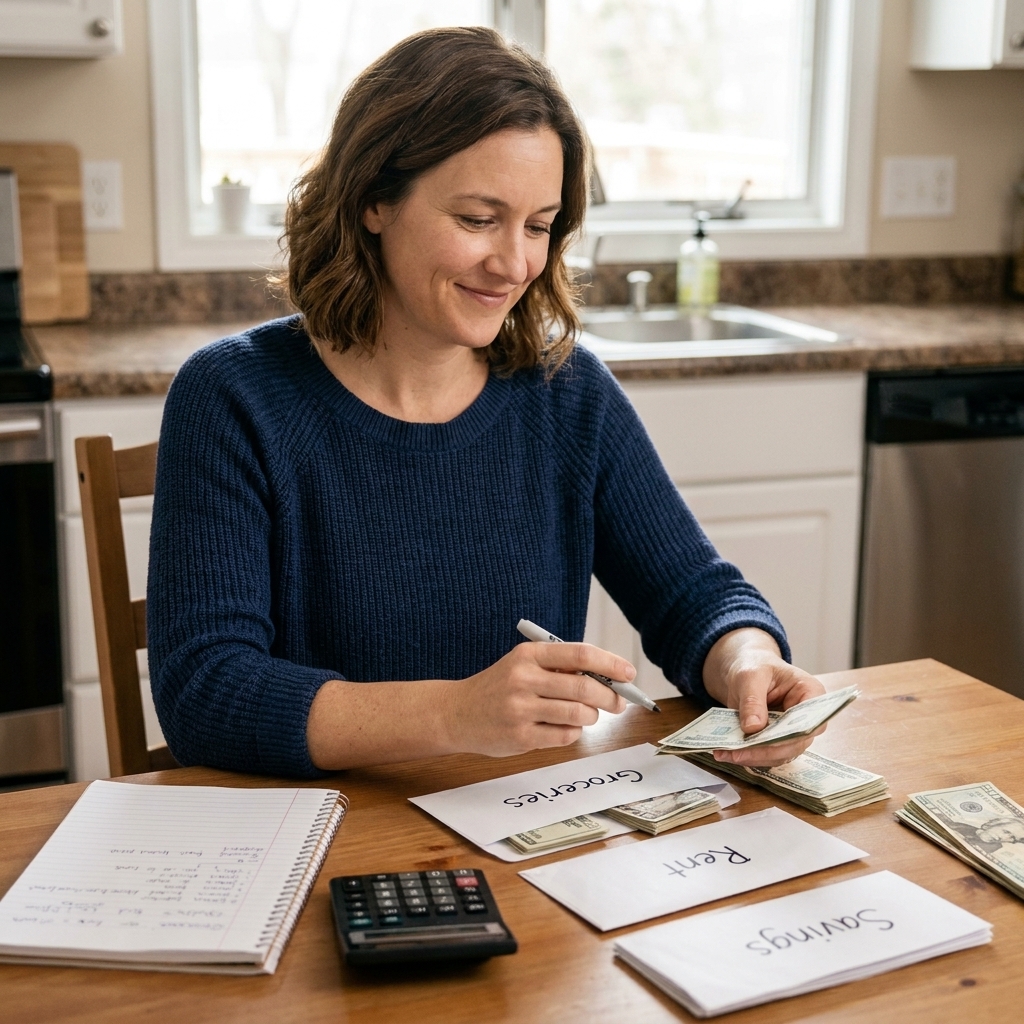
If your savings account has been quietly earning pennies, you are not alone. Traditional savings accounts often pay very low interest, which means your money is basically sitting there with a tiny tip jar.
A high-yield savings account (HYSA) is the same basic idea as a regular savings account, but it typically pays a much higher interest rate. That higher rate can help your emergency fund and short-term savings grow faster without taking on stock market risk.

What is a high-yield savings account?
A high-yield savings account is a savings account that pays a higher interest rate than many traditional savings accounts, usually because the bank has lower overhead (often online-focused) and can pass some of that savings on to customers.
Like a regular savings account, an HYSA is designed for money you may need in the near future, such as:
- An emergency fund
- Car repairs and home maintenance savings
- Travel and holiday sinking funds
- Down payment savings (short to medium timeline)
- Money you are setting aside for quarterly taxes (freelancers)
Compounded daily and credited monthly is common, but schedules vary by bank. If you are comparing accounts, the key is the APY and the account disclosures, not a one-size-fits-all rule.
HYSA vs. traditional savings: what’s different?
At the everyday level, the difference is simple: rate and convenience.
1) Interest rate (the big one)
Traditional savings accounts at brick-and-mortar banks can pay very low interest. HYSAs often pay considerably more, so your balance grows faster even if you never add another dollar.
2) Where they’re offered
Many of the most competitive HYSAs are offered by online banks and credit unions. Some big traditional banks offer them too, but you often have to choose a specific “high-yield” product, not the default savings account.
3) Access to cash
Some HYSAs come with an ATM card, but many are built for transfers rather than cash withdrawals. You can still access your money, it just might take anywhere from 1 to 3 or more business days to move it to checking at another bank, depending on the institution, cutoff times, and weekends or holidays. Some banks also offer faster options.
4) Fees and minimums
Online HYSAs often have low (or no) monthly fees and low minimum deposit requirements. That said, you still need to read the fee schedule because “high yield” does not automatically mean “no fees.”
5) Branch access
If you love walking into a branch, an online HYSA may feel less cozy. For many people, the tradeoff is worth it for the higher interest. You can also keep your local checking account and use the HYSA as your “parking lot” for savings.
| Feature | Traditional savings | High-yield savings (HYSA) | |
|---|---|---|---|
| Interest rate | Often low | Often higher | |
| Best for | Basic savings, convenience | Emergency fund and short-term goals | |
| Access | May be easy in-branch | Usually easy online, transfers may take time | |
| Fees | Varies, can be higher | Often low, but not always |
How HYSA interest works (without the math headache)
When you put money in an HYSA, the bank pays you interest for keeping your funds there. Banks typically advertise the rate as APY, which stands for annual percentage yield, and some also show a separate “interest rate.”
Here is the plain-English version:
- Interest rate is the base rate used to calculate interest.
- APY includes compounding, meaning you earn interest on your interest.
Most savings accounts compound daily or monthly and credit interest monthly. The practical takeaway is: APY is the number you compare across banks.
Quick mindset shift: An HYSA is not meant to make you rich overnight. It is meant to make your savings work harder while staying safe and accessible.
Are high-yield savings accounts safe?
They can be, as long as you choose an institution with proper deposit insurance:
- FDIC insurance covers deposits at FDIC-insured banks up to $250,000 per depositor, per ownership category, per insured bank.
- NCUA insurance covers deposits at participating credit unions with similar limits.
That insurance is what separates “boring safe savings” from “I hope this app does not disappear with my money.” Before opening an account, look for the FDIC or NCUA language on the bank’s site and verify it if you are unsure.

What to look for in a high-yield savings account
Not all HYSAs are created equal. Here are the features I would personally check before clicking “open account.”
Competitive APY
Rates change, and banks adjust APYs over time. Focus on a rate that is competitive right now, but do not panic-switch every time you see a slightly higher number somewhere else. Chasing an extra tiny fraction can become a hobby you did not ask for.
Monthly fees (ideally $0)
A fee can wipe out your interest fast, especially when your balance is small. Look for:
- No monthly maintenance fee, or
- A clear and realistic way to waive it (not something like “maintain $25,000 minimum balance")
Minimum deposit and minimum balance rules
If the bank requires a minimum opening deposit or charges a fee if you dip below a threshold, make sure it fits your real life.
Easy transfers (and reasonable transfer times)
Check how you will move money in and out:
- ACH transfers to your checking account
- Internal transfers if you also open checking there
- Options for same-day or next-day transfers (some banks offer faster options)
Withdrawal limits and policies
Many savings accounts have policies around certain types of withdrawals. The old federal “six withdrawals per month” limit (Regulation D) was suspended in 2020, but banks can still set their own limits and may charge fees for excessive withdrawals. Read the account disclosure so you are not surprised.
FDIC or NCUA insurance
This is non-negotiable for me for an emergency fund.
Mobile app and customer support
If you are using an online bank, the app is basically your branch. Look for solid reviews on:
- Mobile check deposit (if offered)
- Transfer controls
- Two-factor authentication
- Responsive customer service hours
Tradeoffs to know
HYSAs are a great tool, but they are not perfect. A few common friction points:
- Rates are variable. Your APY can drop, sometimes quickly, when broader interest rates change.
- Transfers and holds can be real. External transfers can take multiple business days, and some banks place holds on deposits (especially mobile check deposits).
- Some accounts still limit withdrawals. Even without the old federal cap, your bank may charge fees if you go over its allowed number of certain transactions.
- For long-term goals, returns may lag inflation. HYSAs shine for near-term savings and emergency funds, not as a forever wealth-builder.
How to open an HYSA (step by step)
Opening one is usually straightforward and takes about 10 to 15 minutes.
- Choose a bank or credit union that offers a competitive APY, low fees, and FDIC or NCUA coverage.
- Gather your info: Social Security number or ITIN, a government ID, your address, and sometimes employment details.
- Apply online and set up login security.
- Link your checking account for transfers (this can take a few business days to verify, depending on the bank).
- Fund the account with an initial deposit if required.
- Turn on automation: a recurring transfer on payday is where the habit really starts to stick.
If you are currently living paycheck to paycheck, start tiny. Even $10 a week builds the habit and creates breathing room over time.
Smart ways to use an HYSA
Build an emergency fund that is actually separate
If your emergency fund lives in the same checking account you use for groceries, it is not an emergency fund. It is a temptation fund. An HYSA creates a little friction so you think twice before pulling money out.
Create “sinking funds” for predictable expenses
Sinking funds are savings buckets for things you know are coming. Examples: car insurance, gifts, annual subscriptions, back-to-school, pet vet visits. Some banks let you create multiple savings goals or sub-accounts, which is a huge stress reliever.
Hold short-term goal money that you can’t afford to lose
If you need the money within a few years, the stock market may be too bumpy for comfort. An HYSA is a safer place for near-term goals, even if it will not have the same long-term growth potential as investing.

Common HYSA mistakes (and how to avoid them)
Picking based on APY alone
A slightly higher rate is not worth it if the bank charges fees, has slow transfers, or makes it hard to get help. Compare the whole package.
Forgetting that rates can change
HYSA rates are variable. If the bank lowers the rate later, that is normal. You can always reassess, but you do not need to react to every change.
Keeping too much in checking “just in case”
I get the impulse. I also remember the anxiety of watching a checking account bounce around. A simple rule of thumb is to keep a small buffer in checking and move the rest to your HYSA so it earns more.
Using an HYSA as an investing substitute
An HYSA is for stability and access. Investing is for long-term growth. They can both exist in your plan, doing different jobs.
HYSA FAQ
Is an HYSA the same as a money market account?
Not exactly. Money market accounts can pay competitive rates too, and they sometimes include check-writing or debit card features. They may also come with higher minimum balance requirements. Both can be good, but you will want to compare fees, access, and requirements.
Do I pay taxes on HYSA interest?
Usually, yes. Interest you earn in a savings account is generally taxable income. If you earn $10 or more in interest, banks commonly issue a 1099-INT, but you are responsible for reporting taxable interest either way.
Can I lose money in an HYSA?
If your account is FDIC or NCUA insured and you stay within insurance limits, your deposits are protected. Your balance can still feel like it is losing ground to inflation at times, but you are not taking market risk like you would with stocks.
Should I switch banks to get an HYSA?
You do not have to. Many people keep their everyday checking where it is and open an HYSA elsewhere for savings. Think of it like having a separate pantry for emergency groceries. Same household, different shelf.
The bottom line
A high-yield savings account is one of the simplest upgrades you can make to your financial life. It keeps your money accessible, insured, and earning more interest than a typical savings account. Choose one with a competitive APY, low fees, and easy transfers, then automate your deposits so your savings grows in the background while you live your life.
If you want a starting point, pick one savings goal this week, even if it is small. Financial peace is built with boring, repeatable steps, and an HYSA is one of my favorite “set it and forget it” tools.