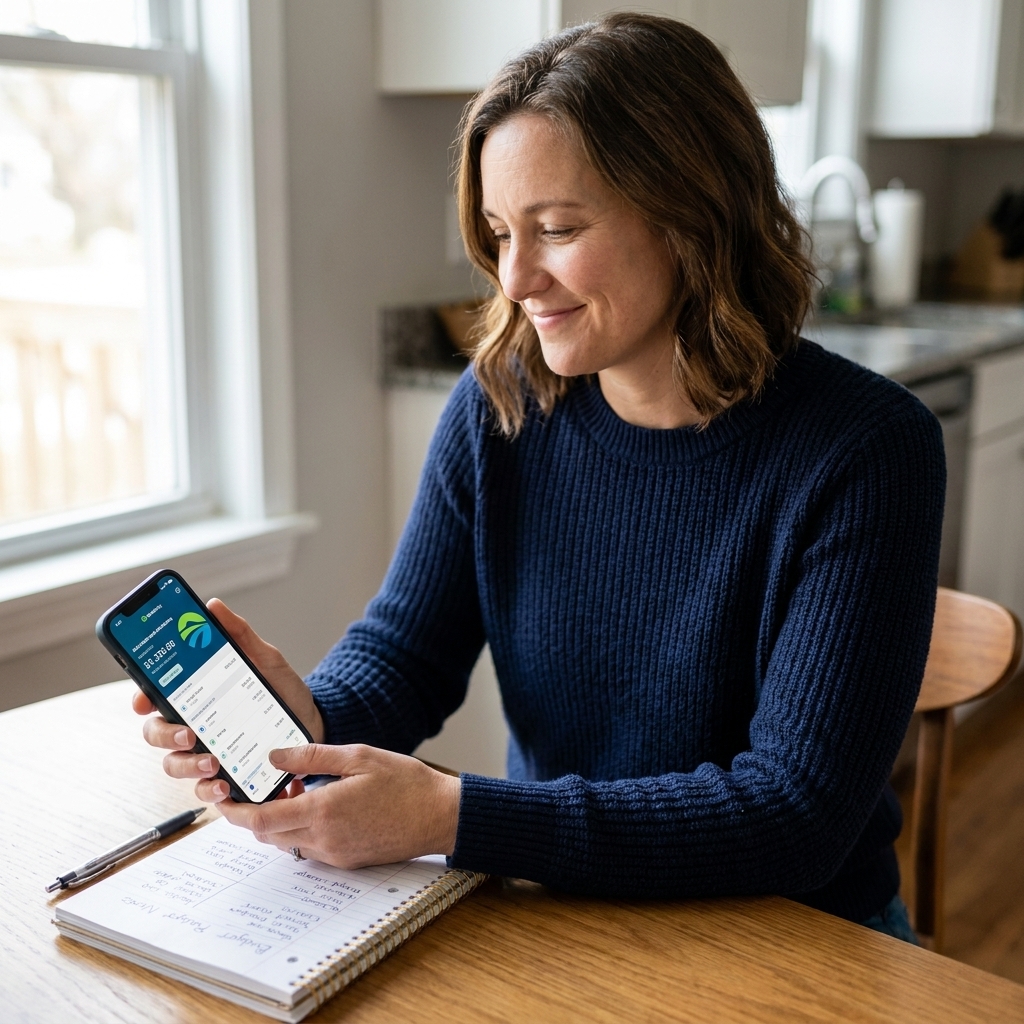
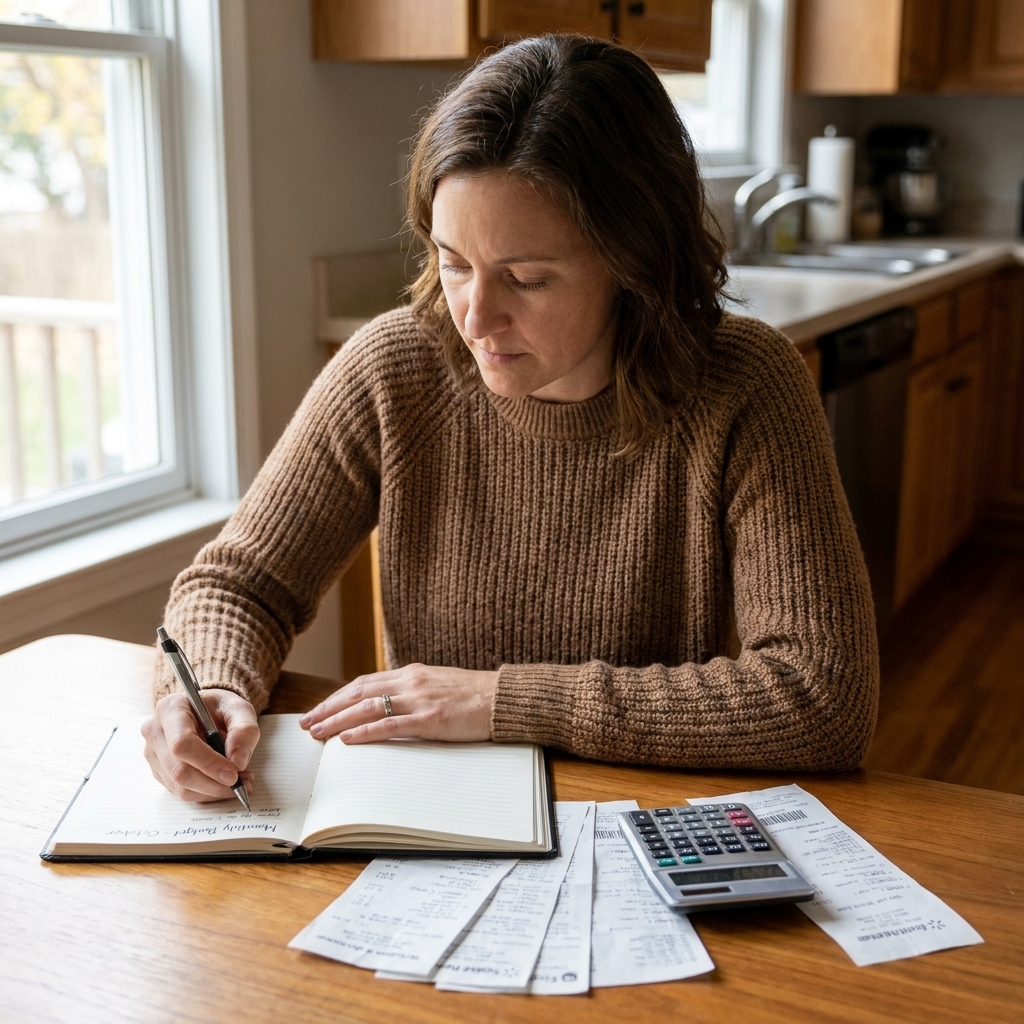
If you have ever had that stomach-drop moment when your card gets declined or a surprise bill hits two days before payday, you are not alone. This is exactly why I love the “first $1,000” goal. It is not a magic number. It is a breathing room number.
And yes, building a $1,000 emergency fund in 30 days can be possible, even when money is tight, if you can combine a few temporary cuts with quick cash (like selling stuff you already own or picking up a couple shifts). For some budgets, $1,000 in a month is a stretch. That does not mean you fail. It just means we adjust the target and keep the system.
The trick is to treat this like a short sprint, not a forever lifestyle. For one month, we focus on quick wins: trimming temporary expenses, grabbing fast cash, and setting up a simple system so the money actually stays saved.

First, set the rules for your $1,000 fund
Before we talk tactics, we need two guardrails so your emergency fund does what it is supposed to do.
What counts as an emergency
- Car repair you need to get to work
- Medical copay or prescription you cannot delay
- Urgent home fix like a leak
- Travel for a true family emergency
- Minimum bills if you lose income unexpectedly
What does not count (for this fund)
- Sales, holidays, birthdays, or a weekend trip
- Routine car maintenance you can plan for
- Eating out because you are tired
If it helps, name your savings account something blunt like “Do Not Touch $1,000.”
Where to keep it
Keep this money separate from your checking account. The best options:
- High-yield savings account at your bank or an online bank
- Separate savings account at your current bank if that is easiest
You want it accessible fairly quickly, but not sitting right next to your debit card like a snack you cannot stop eating. A transfer from a high-yield savings account to checking is often available within 1 to 3 business days, depending on the bank and transfer method.
The 30-day game plan
The easiest way to hit $1,000 fast is to stack three streams:
- Stream 1: Immediate wins (Day 1 to 3)
- Stream 2: Temporary cuts (all 30 days)
- Stream 3: Quick cash (Day 4 to 25)
Most people cannot cut $1,000 from their budget in a month. That is okay. We are going for a mix of cutting, selling, and earning, then locking it away as you go.
One realistic mix might look like $250 from temporary cuts, $450 from selling items, and $300 from two weekend shifts. Your version can be totally different.
Day 1 to 3: Quick wins
Day 1: Find your “right now” dollars (aim: $50 to $150)
Do a fast sweep. Set a 20-minute timer.
- Checking account: Is there extra you can move without overdrafting? Even $20 counts.
- Cash at home: Coins, random bills in bags, jacket pockets.
- Gift cards: Use them for groceries this month and move the same amount of grocery money into savings.
Transfer what you find into your emergency fund immediately. Do not let it sit “for later.”
Day 2: Cancel or pause one thing (aim: $10 to $50)
This is not about depriving yourself forever. It is about a 30-day pause.
- Streaming services you barely use
- App subscriptions
- Gym add-ons or premium memberships
- Automatic Amazon subscriptions
If cancelling stresses you out, pause instead. Many subscriptions let you stop for a month.
Day 3: Lock in an automatic transfer
(aim: $25 to $100 per payday)
Automation is how you keep this goal from becoming a daily willpower fight. Set an auto-transfer for the day after payday, even if it is small. If you get paid weekly, $25 a week is a solid start. If you get paid every two weeks, try $50.
Small math that works: $10 a day is $300 in a month. If daily feels hard, do $70 a week. If weekly feels hard, do $35 twice a week.
Week-by-week savings map
I like giving you options because everyone’s budget is different. Choose a track and then use the ideas below to fill the gaps.
| Track | Weekly Target | Daily Equivalent | Best for |
|---|---|---|---|
| Steady | $250/week | About $36/day | Some room to cut plus one quick-cash push |
| Mixed | $200/week | About $29/day | Small cuts plus selling items |
| Scrappy | $150/week | About $22/day | Tight budgets where quick cash does the heavy lifting |
These targets are built around roughly four weeks. In a 30-day sprint, the extra couple of days are your buffer for timing, slower sales, or a bill that hits on the “wrong” day.
You can also do it “lumpy,” like $300 the first week from selling items, then $175 the next four weeks. Real life is not evenly spaced.
The fastest cuts
The goal is to free up cash without wrecking your life. Think “30-day challenge,” not permanent misery.
Food: the biggest, quickest lever
If you do one thing this month, do this. Food spending can quietly swallow hundreds.
- Run a pantry week: Build meals around what you already have for 5 to 7 days.
- Switch to two simple breakfasts: oatmeal, eggs, yogurt, toast, whatever is cheap in your area.
- Pack lunch 3 days a week: Even replacing $12 lunches with $3 lunches saves $27 a week.
- One “treat” line item: Pick one thing (coffee out or takeout or snacks) and cap it.

Transportation: stop the bleed
- Combine errands into one trip
- Check tire pressure (it can help gas mileage)
- Carpool a couple days if possible
- Pause non-essential driving for the month
Spending leaks that add up fast
- App purchases and mobile games
- Convenience-store runs
- Late fees (set reminders for minimum payments)
- Impulse online shopping (remove saved cards for 30 days)
Quick boundary that works: For 30 days, anything non-essential sits in a cart for 48 hours. Most cravings expire.
Quick cash ideas
If your budget is already tight, cuts alone will not do it. That is normal. This is where quick cash comes in. Use what fits your energy, schedule, and comfort level.
1) Sell items you already own (aim: $200 to $600)
This is the fastest way to create cash without adding more hours to your week.
- Clothes and shoes in good condition
- Small electronics you do not use
- Kids items you have outgrown
- Tools, kitchen gadgets, hobby gear
My no-stress selling method:
- Day 4: Fill one box with 20 items to sell.
- Day 5: Take photos in natural light near a window.
- Day 6: List them all at once. Price to move, not to “win.”
- Day 7: Do one porch pickup window or one meetup location that feels safe.
As you sell, transfer the money to savings that same day. Do not let it blend into checking.
Quick safety note: Meet in public places when possible, bring someone with you, and watch for fake-payment scams. If a buyer insists on overpaying, wants a weird shipping setup, or pushes you to share personal financial info, walk away.

2) Ask for bill reductions (aim: $25 to $150)
This one feels awkward until you do it once. Then it is empowering.
Call scripts you can copy:
- Internet: “Hi, I am reviewing my budget. Are there any promotions or lower-cost plans available for my account?”
- Cell phone: “Can you help me find the lowest plan that still fits my usage? I am willing to adjust my plan today.”
- Insurance: “Can you re-quote my policy and tell me if there are any discounts I am missing?”
Even a $20 monthly reduction matters. For this 30-day sprint, stash the first month of savings immediately.
3) Pick one side hustle for 2 weekends (aim: $150 to $500)
You do not need a whole new identity. You need a short, focused push.
- Pet sitting or dog walking
- Babysitting
- House cleaning for a couple clients
- Yard work, weeding, raking
- Errand running for neighbors
Tip: Tell people it is a “30-day emergency fund challenge.” You would be surprised how many friends or coworkers have a small job they would love to hand off.
Tax reality check: Some gig income is taxable. If you are earning enough that it will matter for you, set aside a portion so tax time does not become the next emergency.
4) Cash-back, refunds, and bonuses (aim: $10 to $100)
- Cash-back you already earned in apps or credit cards (if you can redeem to bank)
- Return items you do not use (be honest with yourself)
- Bank account sign-up bonuses (only if you can meet requirements without overspending)
If a “deal” requires buying things you do not need, it is not a deal. It is a trap wearing a coupon.
Also, watch for fees, minimum balances, and rules you cannot realistically keep up with. Do not open accounts you will not maintain comfortably.
A simple 30-day calendar
Here is a realistic structure. Adjust the days to match your pay schedule.
Week 1: Set up, cut, and sell
- Day 1: Open or designate your emergency fund account. Transfer your found money.
- Day 2: Cancel or pause one subscription.
- Day 3: Set auto-transfer.
- Day 4: Gather 20 sellable items.
- Day 5: Photograph items.
- Day 6: List items.
- Day 7: Pantry plan your groceries for the week.
Week 2: Negotiate and earn
- Make 2 bill-reduction calls
- Do one weekend gig shift or one small job
- Sell at least 5 items
- Transfer all proceeds within 24 hours
Week 3: Tighten the routine
- Repeat grocery plan, repeat packed lunches
- List another 10 items
- Add one extra gig shift or one paid task
Week 4: Finish strong
- Do a final sweep of items to sell or return
- Move any leftover month-end money into savings before it disappears
- Write down what worked so you can repeat it later
If $1,000 in 30 days is not possible
I will never tell you to “just hustle harder” if you are already maxed out. If $1,000 is not realistic in 30 days, do this instead:
- Set a first milestone of $300 (enough to cover many small surprises)
- Then go to $500
- Then go to $1,000
Progress still changes your life. A $300 buffer can often prevent a credit card swipe or at least reduce the damage. That is a big deal.
My rule from my debt payoff days: if the plan makes you feel hopeless, it will not stick. Make it smaller, make it doable, then build from there.
Keep it from disappearing
Make an oops list
Write down three places you will cut from temporarily if you have to use the fund. Example:
- Pause eating out for two weeks
- Sell two items
- Pick up one extra shift
This turns a setback into a refill plan, which keeps you from feeling like you are starting over.
Keep the habit going
After you hit $1,000, keep the auto-transfer going. Even $10 per paycheck builds the habit. Next goals could be:
- One month of expenses
- Deductible amount (car or health)
- Three months of essentials
FAQ
Should I save $1,000 before paying off debt?
For many people, yes. A starter emergency fund helps you avoid new debt when life happens.
That said, priorities can change if you are behind on essentials (housing, utilities), your income is unstable, or you have very high-interest debt that is growing fast. In most cases, the safest baseline is: stay current on minimum payments, get a small cash buffer, then attack high-APR debt aggressively. If you are not sure, compare your interest rates, due dates, and what would happen if an unexpected expense hit this month.
Where is the best place to keep the money?
A separate high-yield savings account is ideal. You want it safe, boring, and not tempting to spend.
What if I can only save $5 a day?
$5 a day is $150 in 30 days. Pair it with one quick-cash move, like selling items, and you can still make major progress. The habit matters as much as the speed.
Is it okay to use a credit card as an emergency fund?
A credit card can be a backup, but it is not an emergency fund. The interest makes emergencies more expensive. Cash gives you options without adding stress later.
Your next step
If you do nothing else, do these three things right now:
- Open or designate a separate savings account for emergencies
- Transfer your first $20 to $50 today
- Pick one action for tomorrow: cancel one subscription or gather 20 items to sell
That first transfer is the hardest because it is emotional. After that, it becomes a system. And systems are how regular people, including past-me with a mountain of debt, finally get ahead.