When I was deep in debt, I used to “save whatever was left over.” Which, shockingly, was almost always… nothing. I wasn’t lazy or bad with money. I was using a system that basically guaranteed failure.
“Pay yourself first” flips that script. It makes saving a priority, not the last thing you try to squeeze in. And once you set it up the right way, it stops feeling like willpower and starts feeling like autopilot.

What “pay yourself first” means
Paying yourself first means you set aside money for your future before discretionary spending gets a chance to eat it. Usually that “yourself” money goes to:
- An emergency fund (your stress buffer)
- Retirement (401(k), IRA, etc.)
- Sinking funds (planned expenses like car repairs, holidays, back-to-school, annual insurance)
- Short-term goals (moving, a down payment, a trip you actually want to take without debt)
Here’s the important part: paying yourself first is about sequence and automation, not income level. You do not have to be “good with money” to do this. You just need a plan for where your savings will go and a way to move it before you can accidentally spend it.
Two common ways to do this (both count):
- True first-dollars: money moves on payday (or via split direct deposit) before you do anything else.
- First after essentials: if cash flow is tight, you cover essentials and minimums first, then run an automatic transfer right after. It protects you from overdrafts while still making saving a default.
Why saving “what’s left” fails
If you’ve ever said, “I’ll start saving when things calm down,” welcome to the club. Life rarely calms down. There’s always a birthday, a tire, a school fee, a subscription you forgot about, or a week where groceries cost more for reasons you didn’t plan for.
When saving is optional, it gets outcompeted by everything that feels urgent. Paying yourself first protects your savings from:
- Decision fatigue (having to “choose” saving every week)
- Accidental spending (swipes that seem small in the moment)
- Timing issues (bills hitting before you remember to save)
- Emotional spending (stress, boredom, celebration)
Kitchen table truth: You don’t rise to the level of your motivation. You fall to the level of your defaults.
Savings vs. bills
This is the most common hang-up, so let’s make it plain: paying yourself first does not mean skipping rent or ignoring your utilities.
Think of it like building a sturdy order of operations:
- First: cover essentials and minimums (housing, utilities, basic food, transportation to work, minimum debt payments)
- Next: run your priority savings transfer (emergency fund, sinking funds, retirement contributions)
- Then: everything else (extras, upgrades, fun money, impulse spending)
If your paycheck is currently so tight that even essentials are a stretch, you can still do this with a tiny amount while you work on the bigger problem (income, expenses, or debt load). Even $5 to $25 per paycheck keeps the habit alive and starts building momentum.
Overdraft-proofing tip: if your bills hit at random times or your balance runs close, schedule your transfer for the day after your paycheck clears and keep a small buffer in checking (even $50 to $200 helps).
How much to save first
There’s no magic number that fits everyone, but here are a few practical ways to choose an amount that won’t boomerang into overdrafts. Consider these as common starting points, not rigid rules.
Option A: Flat amount
This is my favorite for beginners because it’s simple and predictable. Try:
- $10 per week if you’re paid weekly and things are tight
- $25 biweekly if you’re paid every two weeks and things are tight
- $50 to $100 per paycheck if you have a little breathing room
- $200+ per paycheck if you are rebuilding savings fast
Option B: Percentage
If you like rules of thumb, consider:
- 1% to 3% to start if you are new or recovering from debt
- 5% to 10% once your budget feels steady
- 15% total as a long-term benchmark many advisors cite for retirement savings (often counting employee contributions plus any employer match)
Option C: Save “unseen” money
This one hurts the least:
- Save part of every raise (half is a popular approach)
- Save your tax refund before it becomes spending money
- Save cash-back rewards (or at least a portion)
My rule: pick an amount that is slightly challenging but still realistic. If it causes you to rely on credit cards to get through the month, it’s too high for right now. Adjust and keep going.
How to do it
The best pay-yourself-first plan is the one that runs without you thinking about it. Here’s a clean setup you can do in one afternoon.
Step 1: Pick your first goal
If you’re not sure where to start, I recommend this order (these are common targets, not commandments):
- Starter emergency fund: often $500 to $1,000
- Employer 401(k) match: contribute enough to get the full match if you can
- High-interest debt payoff: alongside a small emergency cushion
- Fully funded emergency fund: many people aim for 3 to 6 months of essential expenses
- Retirement and sinking funds: build from there
Step 2: Use the right accounts
Make it easy to keep “future you” money separate from spending money:
- Checking for bills and daily spending
- High-yield savings account for emergency fund and near-term goals
- Retirement account (401(k), IRA) for long-term savings

Step 3: Automate it
Automation is where this goes from “good intention” to real life.
- Set an automatic transfer for the same day your paycheck lands, or the morning after
- If your pay varies, automate a small baseline and do a manual “top-up” on bigger paychecks
- If possible, split direct deposit so savings never touches checking
Step 4: Add a speed bump
You are not weak. You are human. Add one tiny friction point:
- Keep your savings at a different bank than checking
- Remove the savings account from your payment apps
- Turn off “instant transfer” if it tempts you
Step 5: Increase on a schedule
Once the transfer runs smoothly for a month, bump it up:
- Increase by $5 to $25 per paycheck, or
- Increase by 1% of take-home pay
Small increases are sneaky in the best way. Your lifestyle usually won’t notice, but your savings will.
Real examples
Example 1: Tight budget
Take-home pay: $1,800/month
Priority savings transfer: $25 biweekly (about $50/month) into a starter emergency fund
Why it works: It builds the habit and creates a buffer for small surprises without bouncing bills.
Example 2: Steady budget
Take-home pay: $3,800/month
Priority savings transfer: $150/month to high-yield savings plus 401(k) up to employer match
Why it works: Short-term stability plus long-term growth, without trying to do everything at once.
Example 3: Goal-focused saver
Take-home pay: $5,000/month
Priority savings transfer: $300/month emergency fund plus $400/month house down payment fund
Why it works: Two separate buckets reduce accidental spending of goal money.
Common roadblocks
“I can’t afford to save.”
If you truly cannot save, start with $5. I’m serious. The point is to create the default. Then look for one small lever:
- Negotiate a bill or insurance premium
- Cancel one subscription
- Drop one convenience spend for a month and redirect that money
- Pick up a temporary income boost and dedicate it to your starter fund
“My paycheck is irregular.”
Use a two-part system:
- Baseline automatic transfer: a small amount you can always handle
- Paycheck rule: on bigger paychecks, transfer a set percentage (like 10%) within 24 hours
“I keep pulling money back out.”
This is usually a sign your budget is missing a category that deserves its own sinking fund. Common culprits:
- Car repairs and maintenance
- Medical copays and prescriptions
- Gifts and holidays
- Annual fees and subscriptions
When those categories are funded on purpose, your emergency fund stops getting raided for predictable stuff.
Where to put it
If you’re deciding between multiple “good” places to save, here’s a simple priority list that works for most people.
| Goal | Best place to keep it | Why |
|---|---|---|
| Starter emergency fund (often $500 to $1,000) | High-yield savings | Safe, accessible, earns some interest |
| 3 to 6 months emergency fund | High-yield savings | Still needs to be liquid and stable |
| Retirement | 401(k) or IRA | Tax advantages and long-term growth potential |
| Known upcoming expenses | Sinking fund in savings | Keeps you off credit cards for predictable costs |
| Big goal in 2 to 5 years | Savings, CDs, Treasuries, or a money market fund | More stability for shorter timelines; stocks can be risky if you need the money on schedule |
If you have high-interest credit card debt, you do not always have to choose between only saving and only paying debt. A small emergency cushion plus steady debt payoff is often a sweet spot because it helps prevent new debt when life happens. If you’re facing imminent delinquency, eviction, utilities shutoff, or extremely high APR debt, focus first on staying current and avoiding fees, then build the cushion as soon as you can.
A routine to copy
If you want a script, here’s one that works beautifully for a lot of Frugal Grid readers:
- Payday: automatic transfer to emergency fund (or your current top priority)
- Same day: bills paid (or scheduled)
- Weekly: a 5-minute money check-in to see if you need to adjust
- End of month: move leftover buffer money into savings or next month’s bills
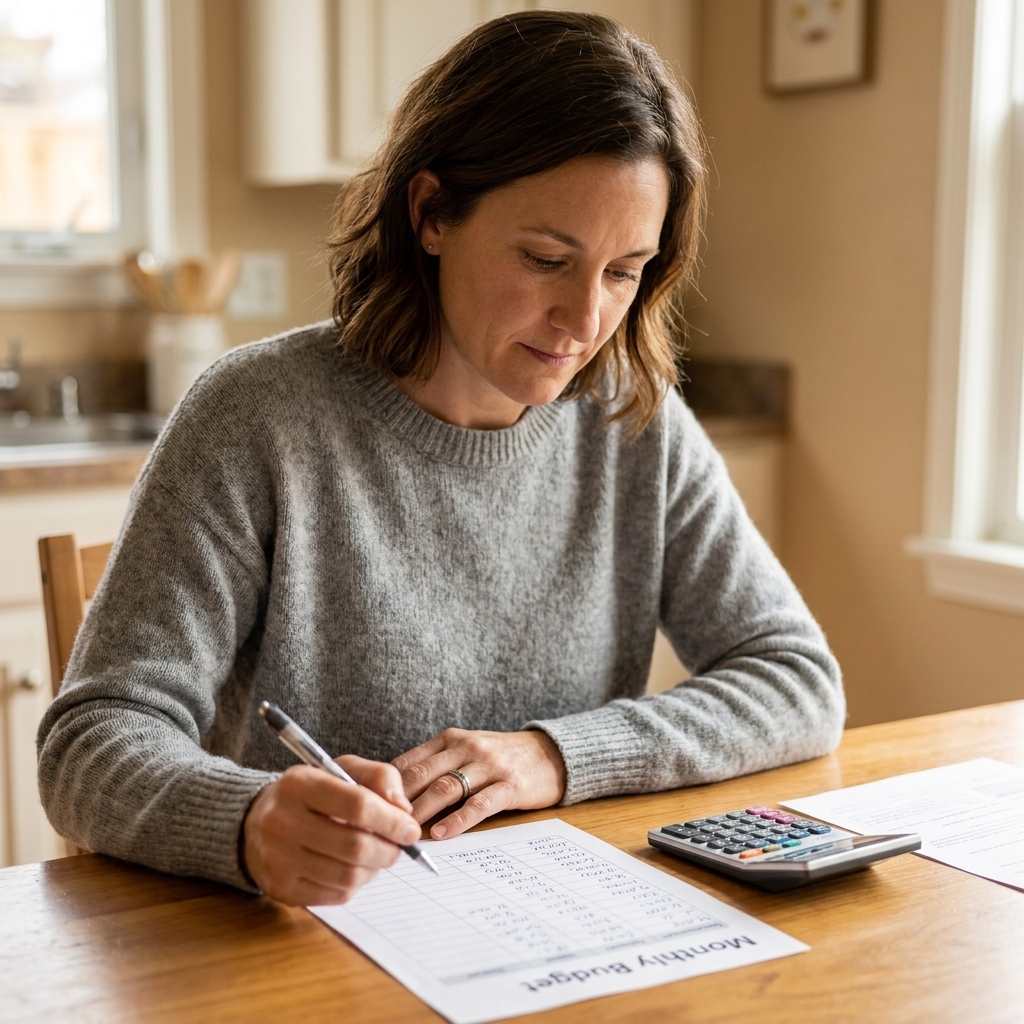
Kitchen table truth: consistency beats intensity. You do not need a perfect month to build a real savings habit.
FAQ
Is this the same as budgeting?
It’s part of budgeting. Think of it as a priority rule inside your budget. Instead of budgeting and hoping savings happens, you budget so that saving happens by default.
Should I do this if I have debt?
Often, yes. A small starter emergency fund can keep you from running back to credit cards when something breaks. Then you can focus more aggressively on the debt. If your debt is high-interest, prioritize the minimum savings cushion and then attack the debt hard.
What if I need the money later?
That is exactly why emergency funds and sinking funds exist. If the money is for a near-term goal or emergencies, keep it liquid in a savings account (or other low-risk options for short timelines). If it’s retirement, assume it stays put.
Biggest mistake?
Making it too complicated. Start with one savings goal, one account, and one automatic transfer. You can build the full system later.
The takeaway
Paying yourself first is less about being disciplined and more about designing a money flow that protects your future. Even a small automatic transfer can turn “I should save” into “I am saving.”
If you take one action today, make it this: set up an automatic transfer for your next payday. Start small, keep it consistent, and let the system do the heavy lifting.