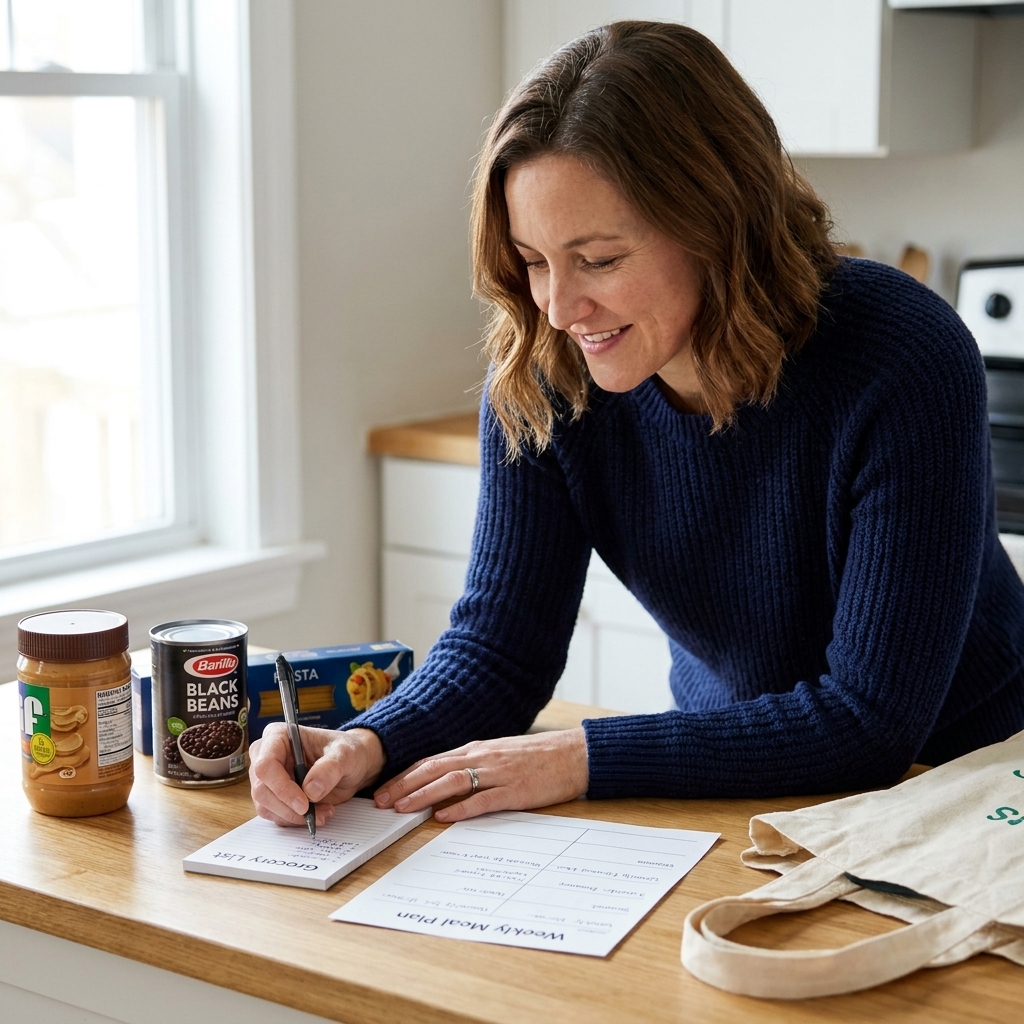
Groceries are sneaky. You can do everything “right” all week, then one quick store run turns into $78 of “just a few things.” If you are trying to get ahead financially, groceries are also one of the biggest places for many households to create quick breathing room without touching your rent or car payment.
And before you picture a binder full of coupons and a Saturday spent chasing deals across town, let me stop you. You can cut your grocery budget a lot with a few repeatable habits. Think: a calmer plan, fewer last-minute trips, and food that actually gets eaten.

Start with a real number
Most grocery budgets fail for one of two reasons: the number is a total guess, or it is based on someone else’s life (or someone else’s zip code). Before you change anything, get clarity on what you spend now.
Do a quick 10-minute baseline
- Pull the last 4 weeks of transactions from your bank or card that include grocery store runs.
- Separate groceries from non-groceries (paper towels, toiletries, pet food). It is normal for those to be on the same receipt, but they can distort your food budget if you lump everything together.
- Count convenience spending too (coffee shop pastries, gas station snacks, work cafeteria). If it replaced a meal, it belongs in the conversation. If you prefer, track it as its own line item so you can see patterns clearly.
Now pick a target that feels slightly uncomfortable but doable, like 10% to 20% less next month. A huge cut can backfire if it leads to burnout and takeout.
If your household has dietary restrictions (gluten-free, allergies), a big family to feed, or limited cooking equipment, your baseline might be higher. That does not mean you are “doing it wrong.” It just means your plan needs to fit your reality.
The 3-meal anchor plan
If meal planning makes you want to lie down, you do not need a perfect spreadsheet. You need anchors.
Pick three dinners you will cook this week. Just three. Then build the rest of the week around leftovers, breakfast staples, and simple lunches.
How it works
- Meal 1: A big batch item (chili, soup, sheet pan chicken and veggies, pasta bake).
- Meal 2: A flexible protein (tacos, stir fry, fried rice, grain bowls).
- Meal 3: A “backup meal” with pantry or freezer staples (breakfast for dinner, frozen dumplings plus a bagged salad, canned tuna melts).
This reduces decision fatigue, cuts impulse trips, and makes your groceries “connect” across meals so you are not buying one-off ingredients that rot in the crisper drawer.

Shop your kitchen first
This sounds basic, but in my experience it is the fastest grocery budget win because you are not starting from zero each week. You already have food. You just need to see it.
The 5-minute fridge and pantry sweep
- Fridge: What will expire in the next 3 to 5 days?
- Produce drawer: What is getting sad but still usable (spinach, carrots, herbs)?
- Freezer: Any “mystery bags” of meat or veggies you can build a meal around?
- Pantry: What carbs and proteins are already there (rice, pasta, lentils, canned beans, canned tomatoes)?
- Snacks: What do you actually like, and what is just taking up space?
Then plan one of your three anchor dinners around what you need to use up. That is how you cut waste without feeling deprived.
Build a repeat cart
The cheapest grocery plan is the one you will actually do when you are tired.
Create a short list of items you buy almost every week, and keep it saved in your notes app. Mine is boring on purpose: eggs, oats, yogurt, bananas, frozen broccoli, tortillas, cheese, rice, beans, and one snack I genuinely enjoy.
Why this cuts your bill
- You buy fewer random “maybe” items.
- You reduce emergency takeout because there is always something to eat.
- You get better at pricing because you see the same items repeatedly.
Once your repeat cart is set, your weekly grocery planning becomes: repeat cart + ingredients for three dinners + produce to round it out.
If you use pickup or delivery, this is even easier. Save your repeat cart, add your dinner ingredients, then wait a few hours before you hit checkout. That pause is a surprisingly good impulse filter.
Use store strategy
You do not need extreme couponing to get deal-level savings. You need fewer trips, fewer impulse items, and a plan for the expensive categories.
Go once per week
Every extra trip increases the odds you buy “just one thing” plus three snacks. If you often run out midweek, add a planned mini-restock item to your list (like more fruit or milk) instead of doing a full second trip.
Shop the edges on purpose
People love to say “shop the perimeter,” but store layouts vary, and plenty of staples show up in the middle aisles. The point is not the map. The point is being intentional, especially around pricey convenience items.
A simple rule: buy ingredients, not helpers.
- Swap pre-cut fruit for whole fruit.
- Swap shredded cheese for block cheese.
- Swap marinated meats for plain meats plus your own seasoning.
One exception: if pre-cut or prepped items are the difference between you eating the food and wasting it (or they support accessibility, energy, or time constraints), they can be worth it. The goal is less waste, not a gold star.
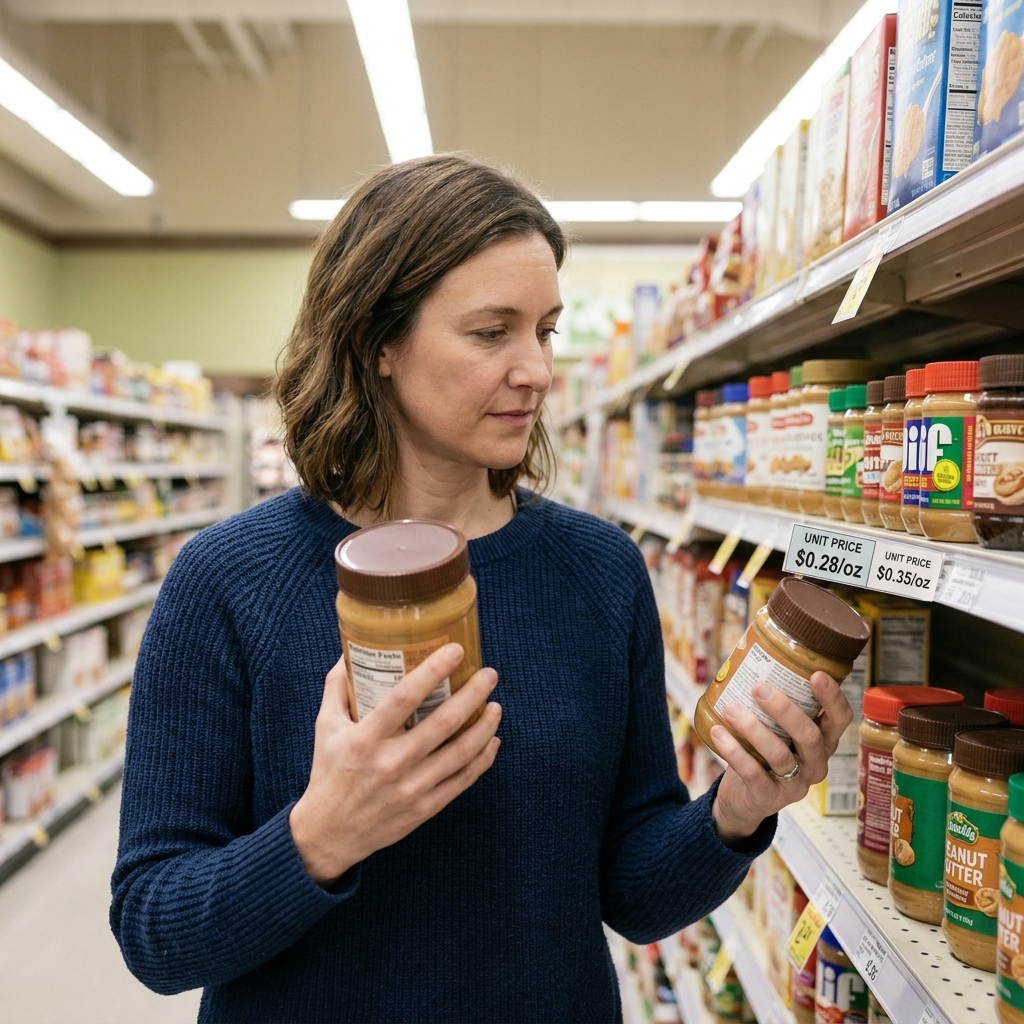
Use unit pricing
Unit price (cost per ounce or per pound) is your best friend, especially when brands run “sales” on smaller sizes. Bigger is not always cheaper, but unit price tells the truth.
Fix drinks and snacks
If your grocery bill feels stubborn, zoom in on two categories that love to balloon:
- Drinks: soda, sparkling water, juice, energy drinks, ready-to-drink coffee
- Snacks: single-serve packs, “health” bars, chips, specialty treats
This is not a lecture. I love a little treat. But the trick is to buy them in a way that does not wreck the budget.
Simple swaps that do not feel sad
- Buy one fun drink per week and make the rest at home (iced coffee, tea, flavored water).
- Choose snacks that can be portioned: popcorn kernels, pretzels, trail mix ingredients, yogurt, apples with peanut butter.
- Pick a “treat budget” line item. When it is gone, it is gone.
Make meat the side
Meat is often the priciest line on the receipt. You can cut costs drastically without cutting it out completely.
Three ways to stretch proteins
- Half and half meals: Mix ground beef with lentils or chopped mushrooms for tacos or pasta sauce.
- Use beans on purpose: Add black beans to chili, chickpeas to curry, or white beans to soup.
- Shift portions: Try serving about 3 to 4 ounces of meat per person as a general portioning idea, then bulk up the plate with rice, potatoes, or veggies. Adjust for appetite, activity level, and dietary needs.
Also, if you see a great price, buy family packs and freeze portions. Just label them when you get home so they do not become “mystery meat bricks.”
Cut food waste
Food waste is basically your grocery budget evaporating. The fix is not perfection. It is a couple of small habits that happen on autopilot.
Routine 1: An “eat this first” spot
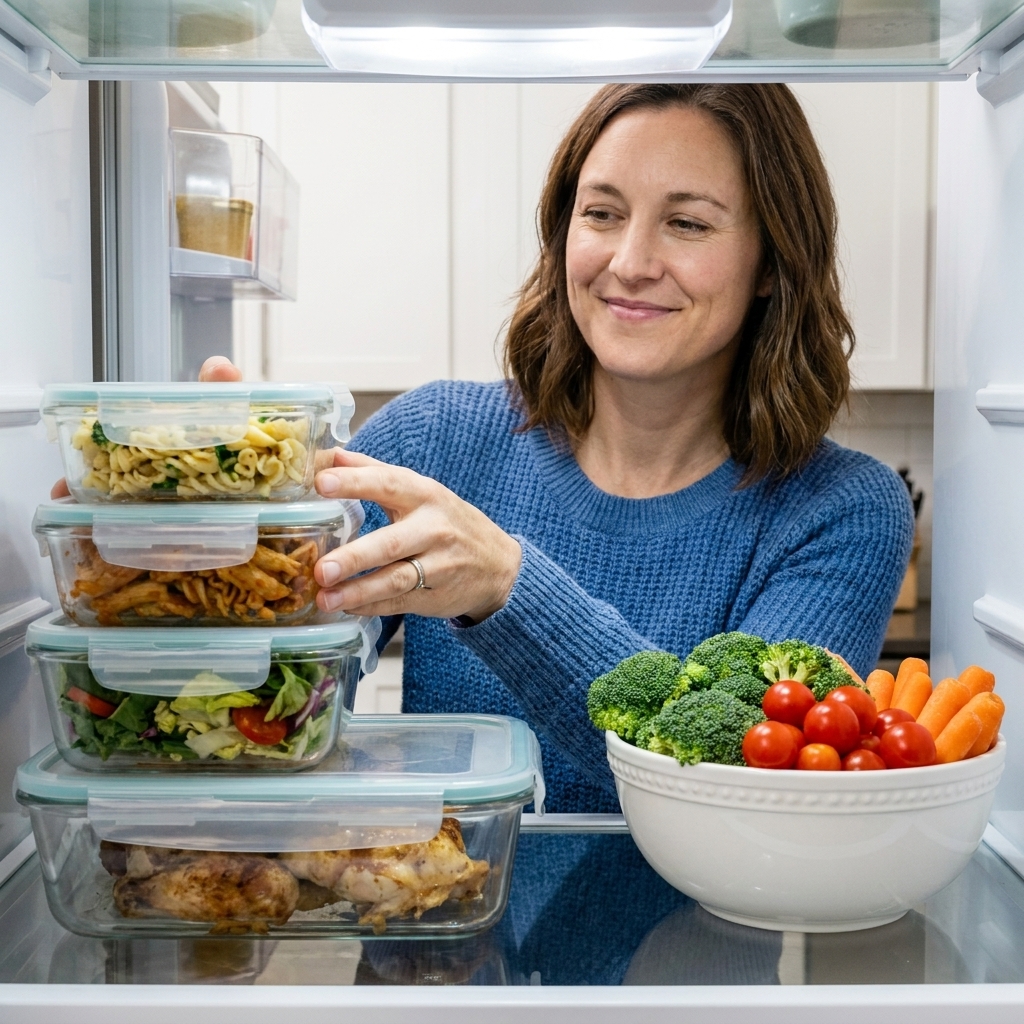
Designate one spot in your fridge for food that needs to be used soon. Leftovers, half a bag of spinach, yogurt nearing its date. If you can see it, you will eat it.
Routine 2: Leftovers night
Pick one night each week as leftovers night. Put it in your phone like an appointment. Depending on your baseline, this can save a meaningful amount over a month because it prevents the “we have nothing” takeout reflex.
Pick the right store
You do not have to store-hop to save money, but it helps to be intentional.
A simple two-store approach (optional)
- Primary store: Where you buy 80% of your list in one trip.
- Value store: Once every 2 to 4 weeks for cheaper staples (rice, pasta, canned goods, frozen veggies, eggs depending on pricing).
If you only have the energy for one store, that is fine. The bigger win is shopping with a plan and buying fewer convenience items.
Try a reset week
If you need a dramatic cut quickly, do a reset week. It is a short-term challenge, not a forever lifestyle.
Option A: Pantry-first
Plan meals around what you already have. Buy only fresh produce, dairy, and any missing ingredient that makes the pantry meals work.
Option B: Freezer-first
Build dinners around freezer proteins and frozen veggies. Add a few fresh items for lunches and breakfasts.
Option C: No midweek trips
Commit to one grocery run only. When you run out of something, you swap, improvise, or go without until next week. This is the fastest way to break the “I will just pop in” spending pattern.
A realistic example
Here is what this can look like for a household that spends around $800 a month on groceries.
- Cut one extra store trip per week: Save $25 to $40.
- Swap 3 convenience items: pre-cut fruit, bagged snack packs, bottled drinks. Save $20 to $35.
- Plan three dinners and use leftovers: Save $50 to $100 by reducing takeout and wasted food.
- Stretch meat twice per week: Save $20 to $40.
That is roughly $115 to $215 in monthly savings. Your results will vary based on where you live, your household size, food prices in your area, and what your habits look like now, but the levers are real.
FAQ
How much should I budget for groceries?
It depends on household size, dietary needs, and where you live. Instead of chasing a perfect number, start with your real average spending and reduce it by 10% to 20% for the next month. If that feels manageable, reduce again.
Is it cheaper to meal plan or just buy what is on sale?
Meal planning usually wins because it prevents waste and reduces extra trips. Sales help most when they fit into meals you already planned, especially for freezer-friendly items.
What if I do not have time to cook?
Plan for low-cook meals on purpose. Rotisserie chicken, frozen veggies, microwavable rice, eggs, and simple sandwiches can still be budget-friendly. The key is deciding ahead of time so you do not default to takeout.
How do I stop impulse buying at the store?
Eat before you shop, stick to a short list, and avoid browsing aisles that are your personal “budget traps.” If you love snacks, plan one snack item on the list so you do not feel deprived. If you shop online, build your cart from a saved list and avoid scrolling the “recommended” sections.
One small step this week
If you do nothing else, do this: pick three dinners, write a list, and commit to one grocery trip. That combo alone is powerful.
And if you have been feeling embarrassed about your grocery spending, please hear me: you are not bad with money. You are just living in a world where food is expensive and convenience is everywhere. A simple system beats willpower every time.