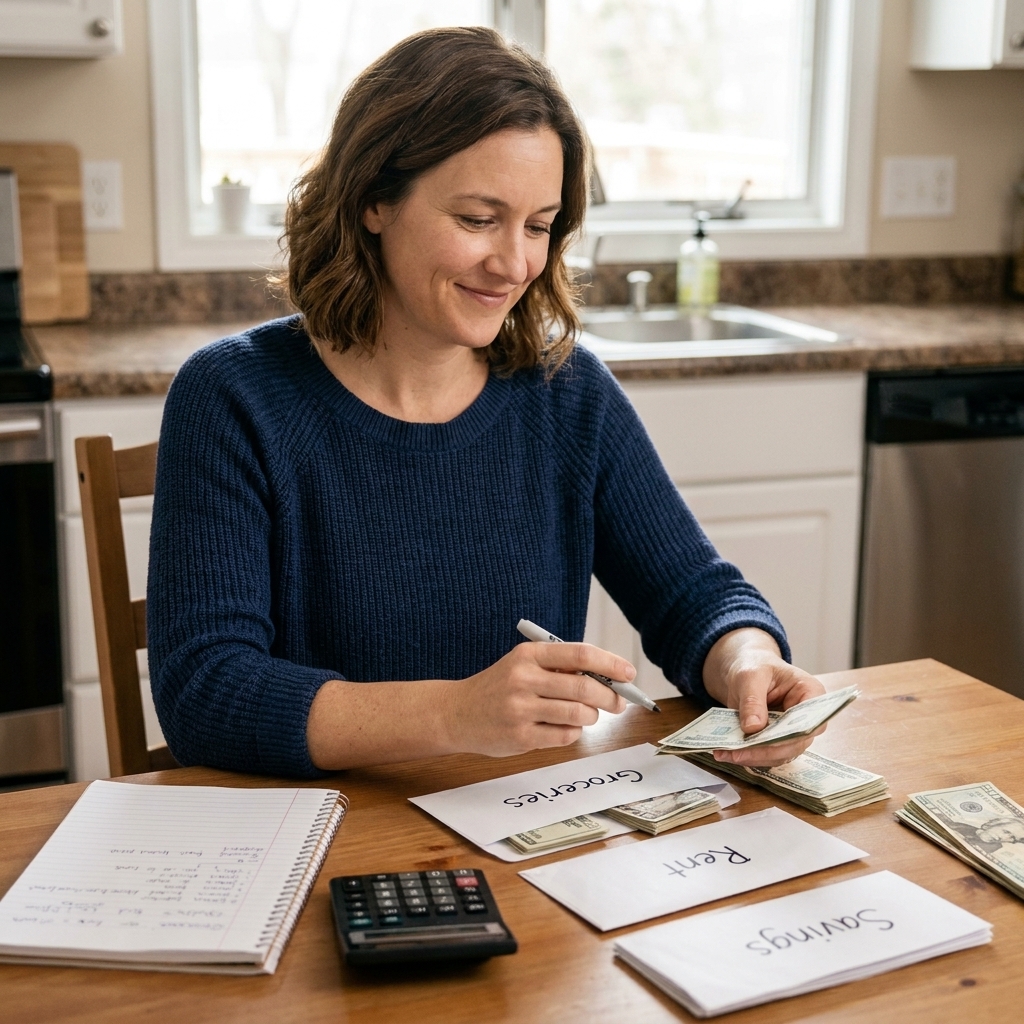
If you are living paycheck to paycheck, being told to “just save more” can feel almost insulting. I get it. When rent is due, groceries are up, and your car is making a new noise, saving can sound like something other people do.
But here is the truth I learned while climbing out of $45,000 of debt: you do not need to save a lot to start saving. You need a system that catches small dollars on purpose, protects you from the next surprise bill, and builds momentum without making your life miserable.
This is a guilt-free, realistic game plan for saving money when your income already feels spoken for.
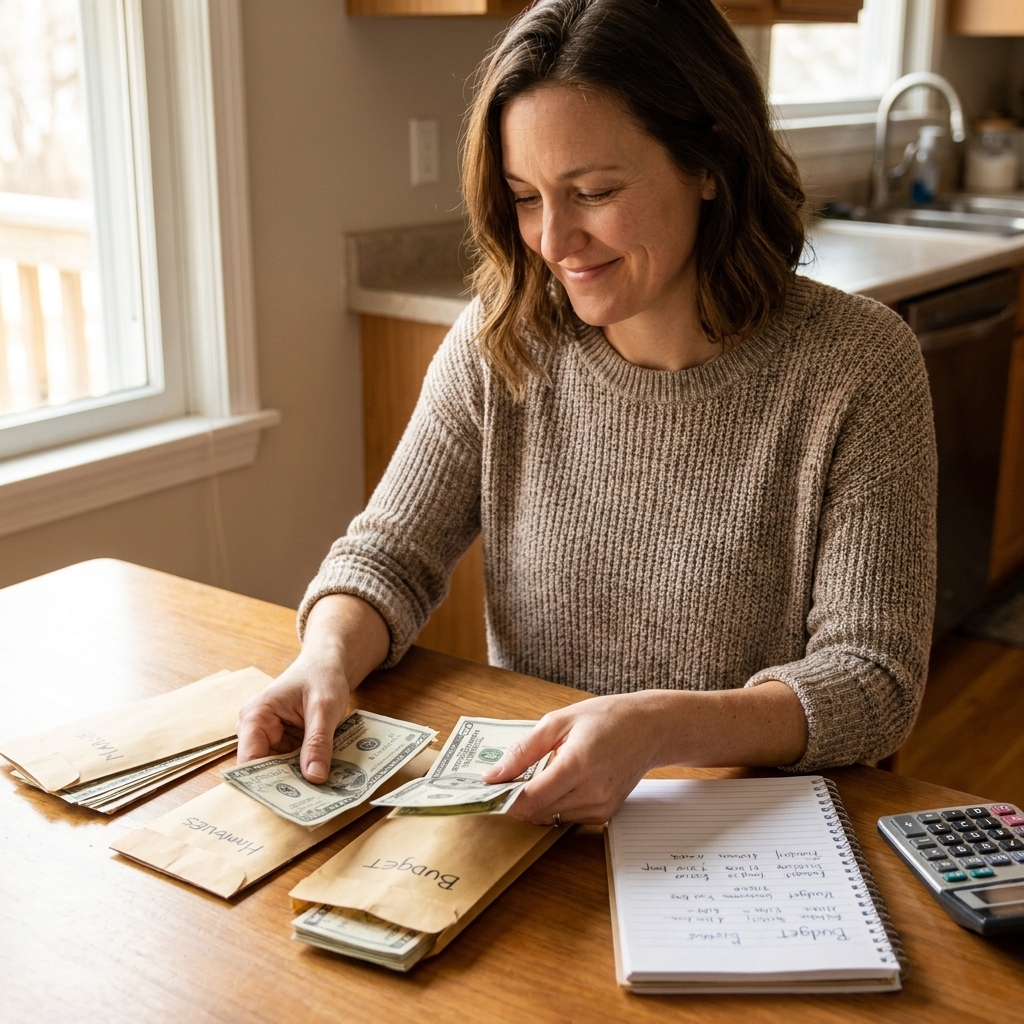
First, get clear on what paycheck to paycheck means
Paycheck to paycheck is not a personality flaw. It usually means one of these is true:
- Your income is too tight for your fixed bills. Rent, minimum debt payments, insurance, and utilities eat most of the check.
- Your spending is unpredictable. You are covering random emergencies, helping family, paying for medical stuff, or dealing with irregular income.
- Your money is leaking in tiny ways. Not because you are careless, but because life is busy and subscriptions and fees are sneaky.
We are going to tackle all three, starting with the fastest wins, then moving to the bigger levers like bills, debt, and income.
Step 1: Build a starter emergency fund
If you do nothing else, do this. When you have even a small cash cushion, you stop needing to swipe the credit card every time life happens. That is how you break the cycle.
Your first target: $300 to $500
I know that can still sound huge. So make it boring and automatic:
- Start with $10 per paycheck (or $5 if that is what is realistic).
- Put it in a separate savings account at a different bank if you are tempted to transfer it back.
- Name it something specific like “Car stuff” or “No more credit card emergencies.”
Once you hit $300 to $500, your next target is one month of essential bills. Not “one month of income.” Just the basics you must pay to stay afloat.
What counts as an emergency?
Think: car repair, urgent medical expense, unexpected travel for family, essential home repair, job hours cut. Not: birthday gifts, a sale, weekend trips, or regular annual bills you can plan for. We will handle those planned expenses with sinking funds.
Step 2: Find money without cutting everything
The fastest savings usually come from fixing leaks, not depriving yourself. And if your budget truly is cut to the bone, do not worry. We will get to “found money” options later. For now, here are the categories that tend to free up cash quickly for most people.
Do a 15-minute subscription sweep
Open your bank app and search for recurring charges. Look for:
- Streaming services you rarely use
- Free trials that quietly became paid
- App subscriptions
- Gym memberships you feel guilty about
- Delivery memberships
Quick rule: if you cannot remember the last time you used it, cancel it today. You can always restart it later.
Stop fees and interest first
When you are paycheck to paycheck, fees hit harder because they can trigger overdrafts and cascade.
- Overdraft fees: ask your bank about opting out of overdraft coverage for debit card and ATM transactions so purchases decline instead of generating a fee. Also ask what happens with ACH payments, checks, and recurring bills, because policies vary. Then set low-balance alerts.
- Monthly account fees: switch to a no-fee checking account or meet the waiver requirements.
- Credit card interest: if you carry balances, paying extra toward high-interest debt often does more for you than a typical savings account, because the interest you are paying can outweigh what you would earn in savings.
Lower one big fixed bill at a time
Big wins usually live in fixed expenses. Choose one to tackle this week:
- Car insurance: request new quotes and ask about discounts. If you raise your deductible, only do it if you would be able to cover that higher deductible out of your starter cushion without derailing everything.
- Phone bill: switch to a prepaid plan or a lower-cost carrier.
- Internet: call and ask for a promotional rate, or downgrade speed if you can.
- Rent: if your lease is ending, negotiate, take on a roommate, or consider moving when it is feasible. This is not a quick fix, but it is often the biggest lever.

Step 3: Use the two-bucket method
When money is tight, saving gets messy because you are saving for multiple things at once. The solution is simple: separate savings into two buckets.
Bucket 1: Emergency fund
This is for surprises you did not plan for. Start with that $300 to $500 starter cushion, then work up to one month of essentials.
Bucket 2: Sinking funds
Sinking funds are mini savings categories for bills you know are coming, like:
- Car maintenance and registration
- Holiday gifts
- Back-to-school expenses
- Annual subscriptions you actually want to keep
- Medical copays and prescriptions
If you have ever “blown the budget” because your tires needed replacing, you did not fail. You just needed a sinking fund.
Simple setup
If your bank lets you create multiple savings “buckets,” do that. If not, use two separate savings accounts. Keep it basic. The goal is clarity, not a perfect spreadsheet.
If you can, use a savings account that pays a decent interest rate and does not charge monthly fees. Just make sure you can move money when you truly need it.
Step 4: Automate the tiny wins
When you are tired and stressed, willpower is unreliable. Automation is your best friend.
- Set an automatic transfer for payday (even $5).
- Do it before you pay anything else if possible. If that is not possible, schedule it for the day after your key bills clear.
- Increase it by $5 every time you get a raise, pay off a debt, or cut a bill.
Small automatic savings looks unimpressive. Then one day you check your balance and realize you have options. That is the whole point.
Step 5: Use a cash-flow calendar
A budget is great, but if your problem is timing, you need a cash-flow calendar.
How to do it in 20 minutes
- Write down your paydays for the month.
- List your bills with due dates (rent, utilities, minimum payments, childcare).
- Ask about moving due dates by calling the company. Some will adjust your due date at no cost, and it can make a big difference.
- Circle the danger weeks where bills stack up before payday.
Once you see the timing problem, you can fix it. This is also how you prevent overdrafts without feeling like you are “bad with money.”

Step 6: Spend smarter, not joyless
When your budget is tight, you do not have room for waste. But you also do not have room for a life that feels like punishment. These swaps are realistic because they reduce cost without demanding perfection.
Groceries: stick to repeatable basics
- Pick 10 go-to meals you can make half-asleep. Rotate them.
- Shop with a protein plan first (chicken, eggs, beans, tuna, tofu), then build around it.
- Use store pickup if impulse buys get you. Even if there is a small fee, it can help reduce random extras.
- Check unit prices and buy the cheapest per ounce when it makes sense.
If you have dietary restrictions, limited cooking equipment, or a schedule that makes cooking hard, keep this simple: choose a few lower-cost staples you can actually tolerate and repeat. “Doable” beats “ideal.”
Convenience spending: give yourself a cap
If coffee runs and fast food are your sanity, that is okay. Set a weekly cap instead of trying to quit cold.
Example: “I can spend $15 a week on treats.” When it is gone, it is gone, and you are not “failing.” You are following the plan.
Transportation: prevent the expensive surprises
- Keep tires properly inflated
- Stay on top of oil changes
- Price shop repairs and ask for itemized quotes
It is not glamorous, but it saves real money.
Step 7: If you have debt, pick a plan
When you are paycheck to paycheck with debt, it can feel impossible to know whether you should save or pay down balances.
A simple rule of thumb
- Get a starter emergency fund first ($300 to $500).
- Then focus on high-interest debt (especially credit cards), while still saving a small amount each paycheck to keep the habit alive.
This prevents the worst-case scenario: paying extra on a card, then swiping it again for an emergency because you have no cash buffer.
Pick one payoff method
- Snowball: pay extra on the smallest balance first for quick wins.
- Avalanche: pay extra on the highest interest rate first to save the most money.
The best method is the one you will stick with. Momentum matters.
Step 8: Create found money on purpose
If your budget is already cut to the bone, saving may require increasing cash coming in, even temporarily. This is not about hustling 24/7. It is about targeted, time-limited boosts.
Quick, realistic ideas
- Sell 10 things you no longer use (Facebook Marketplace, consignment, local buy/sell groups).
- Negotiate one bill and send the difference to savings.
- Use a no-spend weekend once a month and transfer what you would have spent.
- Pick one short-term side gig that fits your life (a few deliveries, pet sitting, babysitting, weekend shift). Put a stop date on it so it does not consume you.
Even $100 to $200 of found money can jump-start your starter cushion and reduce stress fast.

A simple 30-day plan
If you want a starting point you can actually follow, here is a 30-day plan I would use if I were starting over.
Week 1: Stabilize first
- Cancel one subscription
- Ask about overdraft options, opt out where it makes sense, and set low-balance alerts
- Ask to move one bill due date if timing is hurting you
Week 2: Start the starter cushion
- Open or designate a separate savings account
- Auto-transfer $5 to $25 on payday
- Sell 3 to 5 items and deposit the money
Week 3: Lower one fixed bill
- Get car insurance quotes or reduce your phone plan
- Send the monthly difference to savings automatically
Week 4: Add one sinking fund
- Pick one upcoming expense (car maintenance or gifts)
- Save a small amount weekly toward it
That is it. Nothing fancy. Just steady progress you can repeat.
Common questions
Is it even worth saving $5 or $10 at a time?
Yes. The dollars matter, but the habit matters more. Small savings creates a buffer, reduces panic, and breaks the pattern of needing credit for every surprise.
What if I cannot save anything right now?
Then your first “saving” move is preventing new financial damage. Focus on stopping fees, timing bills, and getting help where you can (community resources, utility assistance, food pantries, medical billing plans). This is not failure. This is stabilizing.
Should I use a credit card for emergencies?
If you have to, you have to. But the goal is to replace credit card emergencies with cash emergencies as quickly as possible, starting with that $300 to $500 cushion.
How do I save with irregular income?
Base your plan on your lowest typical month, then treat extra income as catch-up money for sinking funds, debt, and savings.
Example: if your low month is $2,200, build your base bills and spending around that. Then when you have a $2,700 month, you can send the extra $500 to your starter cushion, sinking funds, or high-interest debt. Over time, irregular income needs a bigger buffer because it needs a bigger shock absorber.
What about retirement or a 401(k) match?
If you have a 401(k) match, it can be worth working toward contributing enough to get the match once your immediate cash-flow is stable and you are not constantly overdrafting. If you are in full-on survival mode, it is okay to focus on stabilizing first.
A final note
I used to think saving was something I would do “later” when I made more money and life calmed down. But later kept not coming. What changed everything was starting small and staying consistent, even when it felt pointless.
You do not need perfection. You need one next step. Cancel one thing. Save one tiny amount. Make one bill cheaper. Then repeat.
That is how financial breathing room is built, one normal week at a time.
Quick note: This is general guidance, not personal financial advice. Rules and options vary by bank, lender, insurance policy, and location, so it is always worth double-checking the details before you change bill due dates, overdraft settings, or deductibles.