Grocery prices have a special talent for blowing up a budget quietly. One “quick” midweek run turns into $86, you get home, and somehow you still have nothing that makes a real meal.
I have been there. When I was digging out of debt, groceries were one of the few categories I could actually control without needing a raise or a miracle. The trick was not coupons. It was building a few repeatable habits that made my cart smaller, my meals simpler, and my food waste almost disappear.
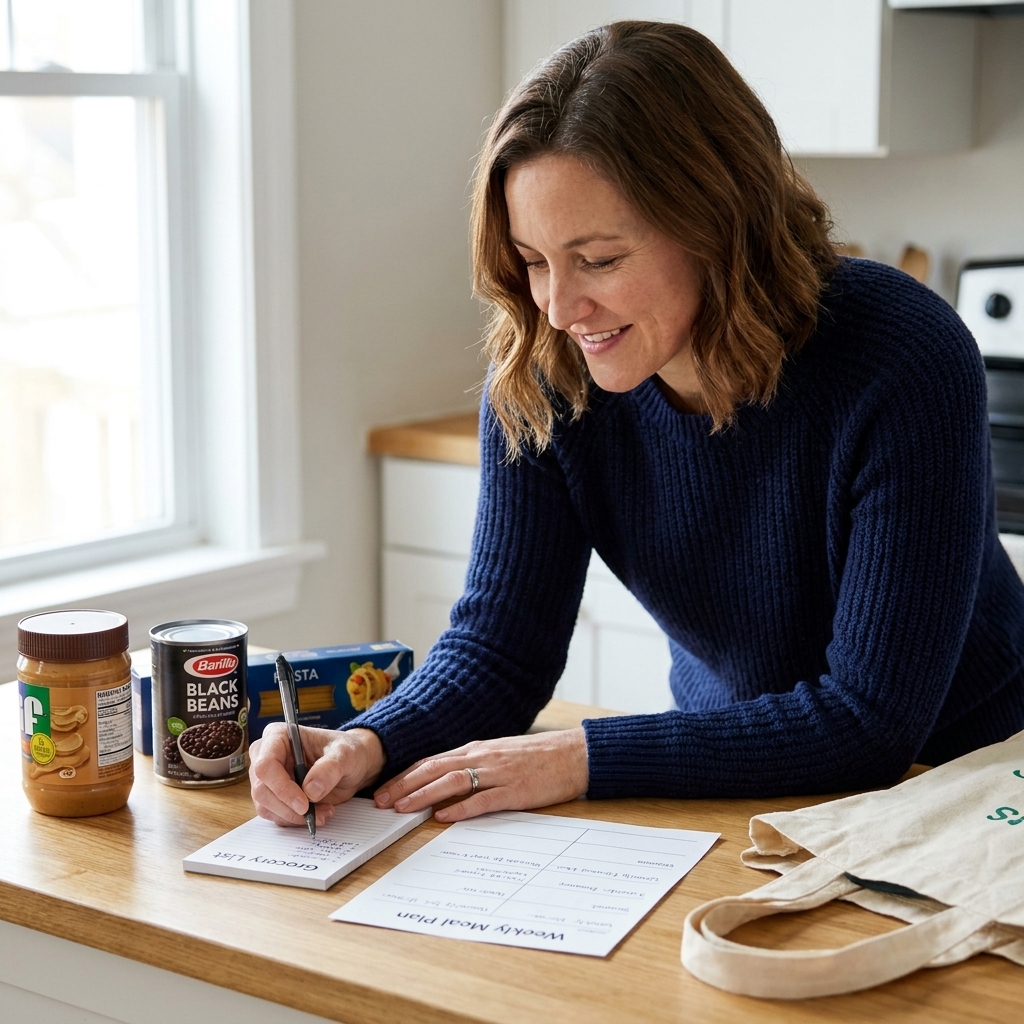
Below are 17 simple ways to cut your monthly grocery bill without using coupons. Pick three to start this week. Once they feel automatic, add a couple more. Tiny changes stack up fast.
Meal planning that saves
1) Plan dinners first, then build the list
Most people try to plan everything: breakfasts, lunches, snacks, and dinners. That is exhausting and often ends in takeout.
Instead, plan 4 to 6 dinners you will realistically cook. Then build your list from those meals. Breakfast and lunch can be “repeat meals,” meaning you rotate a couple easy go-tos for the week (like oatmeal, eggs, yogurt, sandwiches, or leftovers) instead of reinventing them daily.
- Why it saves: fewer random ingredients, fewer impulse buys.
- Try it: pick 2 chicken meals, 2 vegetarian meals, 1 pasta or rice bowl, 1 “leftovers” night.
2) Make a simple meal matrix
A meal matrix is just a tiny menu you rotate. Same structure, different flavors.
- Taco night (beans, chicken, or ground turkey)
- Sheet pan dinner (frozen veg + protein + seasoning)
- Pasta night (marinara, pesto, or garlic and oil)
- Stir-fry (frozen veg + rice)
- Soup or chili (big batch)
Why it saves: you buy the same core ingredients and actually use them up.
3) Schedule a “use what you have” night
This is the single easiest way to cut food waste. Pick a night, usually the day before your next grocery trip, and commit to eating what is already in the fridge, freezer, and pantry.
Ideas: omelets, “clean-out-the-fridge” fried rice, soup, quesadillas, pasta with whatever veggies you have.
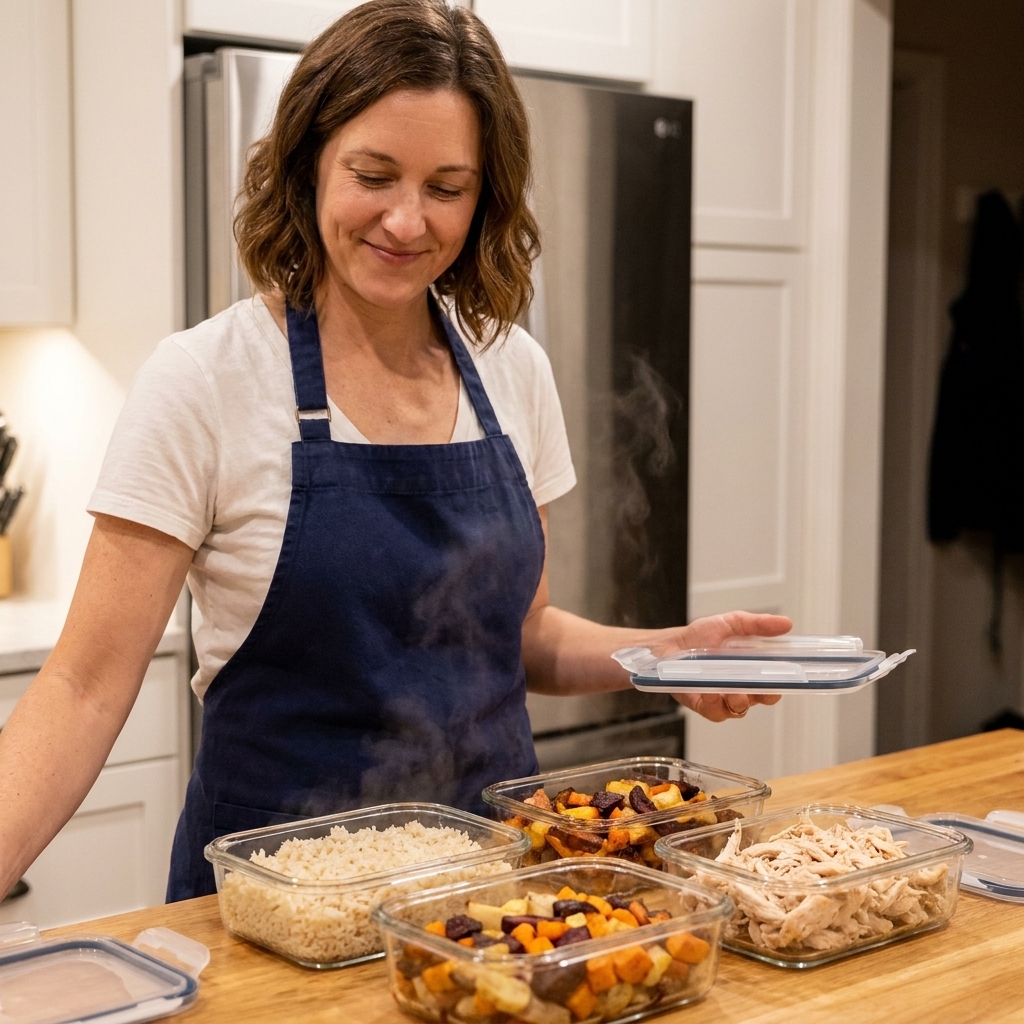
4) Cook one big-batch anchor, then remix it
Big-batch cooking does not have to mean eating the exact same thing five days in a row. Make one anchor item and repurpose it.
- Cook shredded chicken: tacos one night, BBQ sandwiches another, salad or wraps for lunch.
- Cook a pot of beans or lentils: burrito bowls, soup, then “beans on toast” style lunch.
- Cook a pot of rice: stir-fry, then fried rice, then a rice bowl.
Why it saves: reduces convenience food spending and prevents “nothing to eat” takeout.
Shop smarter
5) Use a list and eat first
This sounds almost too basic, but it works. Shopping hungry makes everything look like a need. Shopping without a list invites wandering, and wandering is expensive.
- Pre-game: eat a snack, bring a list, and give yourself a time limit.
- Bonus: use your phone notes app and sort the list by sections of the store (produce, dairy, pantry, frozen).
6) Do one big shop and one restock
If you are running to the store three or four times a week, your grocery total will often creep up because it creates more chances for impulse buys. A simple rhythm helps:
- Big shop: everything for planned dinners plus basics.
- Tiny restock: one quick trip for fresh items like fruit, milk, or salad greens.
Try this: keep the restock trip to produce and essentials only, with a short list and no browsing aisles.
And yes, adjust this for real life. Bigger households might restock twice. Busy weeks might mean one larger trip and you are done.
7) Shop the perimeter on purpose
Yes, the perimeter has a lot of whole foods. It also has some of the priciest impulse traps: fancy cheese, pre-cut fruit, specialty drinks.
Walk the perimeter with purpose: produce you will use, proteins on your plan, and one or two simple staples. Then hit the inner aisles for budget workhorses like oats, beans, rice, pasta, canned tomatoes, and frozen vegetables.
8) Use unit price like a secret weapon
Ignore the big bold sticker price and look at the unit price (price per ounce, per pound, per count). It quietly tells you the truth.
- A larger container is not always cheaper per ounce.
- “Family size” is only a deal if you will finish it before it goes bad.
- Store brands are often dramatically cheaper per unit.
9) Try curbside pickup
If you routinely walk in for “just a few things” and leave with chips, cookies, and a seasonal candle you do not remember choosing, curbside pickup can be a game changer.
You can see your total before checkout, remove items easily, and stick to your plan.
Just watch for pickup fees, minimum order rules, and substitutions that swap in a pricier option than you would have chosen.
Swaps that still taste good
10) Use store brands for staples
For many basics, the generic version often tastes very close to the name-brand. In some cases, store brands are made by the same manufacturers or parent companies as name brands, but the real win is usually simple: lower price for a product that does the job.
Start with low-risk swaps:
- Oats, rice, pasta
- Canned beans and tomatoes
- Flour, sugar, baking supplies
- Frozen vegetables
- Milk, butter, shredded cheese (try once and decide)
If you truly love a name-brand item, keep it. The goal is not misery. It is being intentional.
11) Trade convenience for “two-step convenience”
Pre-cut fruit, bagged salad kits, and individually packed snacks cost a premium. But you also need meals to feel easy or you will bail.
Try “two-step convenience” instead:
- Buy whole carrots and baby spinach instead of chopped veggie trays.
- Buy a big tub of yogurt instead of single-serve cups.
- Buy a block of cheese and shred it once at home.
You still get easy meals, just without paying extra for someone else to do a couple minutes of work.
12) Make meat a supporting actor
This one can move your budget fast. You do not have to go vegetarian to save money. Just reduce the portion.
- Use half the ground meat and add beans or lentils.
- Slice chicken thin and load up on veggies and rice.
- Do one meatless dinner per week (chili, lentil soup, breakfast-for-dinner).
Budget-friendly proteins: eggs, beans, lentils, canned tuna, peanut butter, rotisserie chicken used across multiple meals.
13) Cut the “hidden” budget busters
If your total feels mysteriously high, look at drinks and snacks. A few small adds can quietly rival the cost of a whole dinner.
- Make water, iced tea, or coffee at home your default and treat bottled drinks as a sometimes item.
- Pick 2 to 3 snacks for the week and buy only those.
- If you love something pricey (sparkling water, protein bars), set a weekly limit and stick to it.
Waste less
14) Freeze before it goes bad
Most of us freeze food as a guilt move when it is already on its last day. Freeze earlier and you will actually want to use it later.
- Freeze bread the day you buy it if you do not go through it fast.
- Freeze half a pack of tortillas.
- Freeze chopped onions, peppers, and celery for future soups and stir-fries.
- Freeze ripe bananas for smoothies or banana bread.
Pro tip: keep a running “freezer inventory” list on your phone so you remember what is in there.
15) Store produce like you want it to live
Food waste is often a storage problem, not a willpower problem.
- Leafy greens: for whole greens (not pre-washed mixes), wash, dry, and store with a paper towel in the container.
- Herbs: most soft herbs like cilantro and parsley do well like flowers in a jar of water in the fridge. Basil is usually happier at room temperature.
- Berries: do not wash until you are ready to eat (moisture speeds spoilage).
- Apples: store away from ethylene-sensitive produce (like leafy greens, cucumbers, and broccoli) since apples can speed ripening.
16) Buy what is in season (and be flexible)
Out-of-season produce is often expensive and disappointing. In-season produce tends to be cheaper and tastes better, which means you actually eat it.
- If berries are pricey, swap to bananas, oranges, or apples.
- If fresh vegetables are expensive, lean harder on frozen vegetables for the week.
- Let what looks good and affordable guide the plan, not the other way around.
17) Use a snack bin and a “use first” shelf
This is my low-effort household favorite.
- Snack bin: put grab-and-go snacks in one container so people stop hunting and grabbing random expensive items.
- Use first shelf: dedicate one fridge shelf for food that needs to be eaten soon (leftovers, open yogurt, half a bell pepper).
Why it saves: you actually see what you own, so you use it.
A simple weekly routine
If you want this to feel easy, use a repeatable routine:
- 10 minutes: check fridge, freezer, pantry. Write down what must be used.
- 10 minutes: pick 4 to 6 dinners that use what you already have.
- 5 minutes: write a list by store section and set a rough budget target.
- Shop once: big trip. Then a tiny restock only if needed.
If your grocery plan relies on being a totally different person with unlimited energy, it will fail. Build a plan around the real you.
Quick FAQs
How much can you save without coupons?
It depends on how you shop now, but many households can save meaningful money by cutting waste, reducing impulse buys, and planning meals around inexpensive staples. If you currently shop multiple times a week, buy lots of convenience foods, or throw away food often, you will usually see the biggest gains.
Is buying in bulk always cheaper?
No. Bulk is only a deal if (1) the unit price is lower and (2) you will use it before it expires. Pantry staples like rice, oats, flour, and frozen items are the safest bulk buys for most people.
What if I do not have time to cook?
Focus on “assembly meals” and big-batch anchors. Think rotisserie chicken, bagged frozen veggies, microwavable rice, pasta, eggs, and simple sauces. The goal is fewer restaurant meals, not gourmet cooking.
Should I shop at more than one store?
Sometimes. If one store is consistently cheaper for your staples, it can be worth it. But extra stops can also tempt you into extras. A good compromise is doing most shopping at one store, then using a second store only for a short, planned list when the savings are obvious.
Pick your first three
If you are not sure where to start, choose these three for the biggest impact with the least effort:
- Plan 4 to 6 dinners and shop from the plan
- Add one “use what you have” night
- Switch store brands for pantry staples
Do those for two weeks, then come back and add one more habit. Your grocery bill will start shrinking without a single coupon in sight.